
Common Defects and Limitations Must Mold Finishers Anticipate with CP
What Common Defects and Limitations Must Mold Finishers Anticipate with CP?
Chemical Polishing CP is a process of controlled corrosion. The very nature of relying on an exothermic, acid-driven reaction means that the polish quality is highly sensitive to chemical balance, heat distribution, and steel homogeneity. When these factors go awry, the defects are often irreversible and require substantial mechanical rework.
1. CP Cannot Perform Macro-Leveling
The primary limitation of CP stems from the principle of chemical dissolution itself.
- Failure Mode: CP is an excellent micro-leveling tool (removing roughness in the 1µm range and below), but it is inherently poor at macro-leveling (removing gross scratch patterns or dimensional defects in the 10µm to 50 µm range).
- Root Cause: The viscous boundary layer that forms on the metal surface ensures that the rate of dissolution is almost constant across the component, regardless of large-scale roughness. It lacks the directed energy of mechanical force or the controlled current density of ECP.
- Consequence: Attempting to remove deep scratches with CP only results in excessive material loss and brightening of the scratch walls, making the defect shiny but still visible. The mold surface geometry will be compromised before the flaw is fully erased.
- Preventative Measure: Mold finishers must ensure the mechanical preparation stage is completed to at least 800 grit (for brightness enhancement) or 1200 grit (for true mirror pre-finish) before the part enters the CP bath.
2. Pitting, Etching, and Intergranular Attack
These defects represent the severe consequences of a runaway or unbalanced chemical reaction, directly attacking the microstructure of the mold steel.
Pitting (Localized Attack)
- Failure Mode: Random, deep, microscopic holes appearing on the mold surface.
- Root Cause: Pitting occurs when the chemical solution preferentially attacks non-metallic inclusions (such as sulfides or oxides) that are exposed at the steel surface. These inclusions are often more chemically reactive than the surrounding iron matrix, leading to rapid, localized dissolution.
- Contributing Factors:
- Over-immersion: Leaving the mold in the bath too long.
- Stagnant Bath: Lack of proper agitation prevents fresh solution from reaching all areas uniformly.
- Inadequate Pre-Cleaning: Any residual grease or scale can act as a mask, leading to uneven attack.
Intergranular Corrosion (Etching)
- Failure Mode: The surface appears dull, frosted, or overly matte despite long immersion. Under microscopic inspection, the individual steel grains become visible.
- Root Cause: The chemical solution is attacking the grain boundaries &phaseboundaries of the alloy faster than the bulk grain centers. This indicates the bath chemistry is no longer promoting a stable, viscous layer necessary for smoothing, but is acting as a rapid etchant.
- Contributing Factors:
- High Temperature: Excessive heat accelerates the reaction rate beyond the polishing range.
- Spent Electrolyte: A bath saturated with dissolved metal ions (e.g. Fe2+) loses its viscosity and polishing capability.
3. Edge Rounding and Dimensional Compromise
This is the inevitable trade-off of any non-mechanical dissolution process.
- Failure Mode: Sharp corners, parting lines, and tight radii lose their definition and become excessively rounded, leading to flash, leakage, or functional failure in the molded part.
- Root Cause: This is an inherent property of surface kinetics. Sharp features present a larger surface area to volume ratio to the etchant, leading to higher dissolution rates at these points compared to large, flat surfaces. The concentrated chemical attack accelerates material removal at edges.
- Consequence: Dimensional tolerances are often violated, especially on precision inserts. For instance, a 90° internal corner might gain a 10 µm radius where none was intended.
- Mitigation: This must be controlled by minimizing processing time to the absolute limit required for brightness. For molds with critical sharp corners, CP may be unsuitable, and manual lapping or controlled ECP is required.
4. Post-Polishing Defects: Smut and Passivity Breakdown
The immediate steps after removal from the CP bath are just as critical as the polishing itself.
Smut Formation
- Failure Mode: A dull, sticky, dark film or residue remains on the mold surface after the CP cycle.
- Root Cause: This film is typically composed of alloying elements & compounds (e.g., carbon, chromium carbides) that are not readily soluble in the CP bath. While the surrounding iron matrix is dissolved away, these less-reactive elements are left behind as a residue.
- Remedy: Smut indicates bath chemistry issues (e.g., lack of strong oxidizers or proper accelerators). It requires immediate and thorough neutralization followed by an extremely aggressive secondary rinse or a mild supplementary chemical cleaning step.
Incomplete Neutralization & Loss of Passivity
- Failure Mode: The mold develops rust, staining, or a localized corrosive attack days or weeks after polishing.
- Root Cause: CP solutions are highly concentrated acids (e.g. HNO3 & HF). If rinsing is incomplete, residual acid trapped in microscopic pores or crevices continues to attack the steel, leading to failure. Furthermore, the final step (passivation) may be skipped.
- Critical Process: A complete post-treatment requires:
- Immediate Overflow Rinsing (to remove bulk acid).
- Alkaline Neutralization (to fully kill residual acid).
- Final Passivation (to chemically grow a stable, protective oxide layer on the steel).
ABOUT HOPO MOULD
HOPO has the experienced technical team and advanced processing equipments. We insist the principle of "satisfying customers' demand with professional solutions". In order to achieve this goal and serve better for our customers, we have imported more than 20 sets advanced large-scale precision CNC machining equipments, EDM machines and milling facilities. Besides, we have set up a complete CAD / CAM / CAE system to get a better guarantee of the accuracy. CP solutions are highly concentrated acids (e.g. HNO3 & HF). If rinsing is incomplete, residual acid trapped in microscopic pores or crevices continues to attack the steel, leading to failure. Furthermore, the final step (passivation) may be skipped.
Related Articles
 The Top Injection Molding Industry Leader 2026-02-24 0
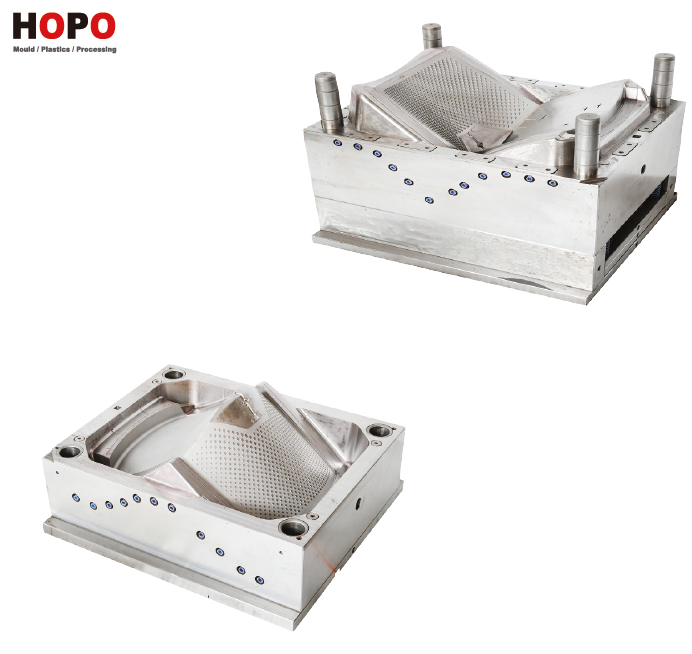 2026 Injection Molding Industry Leader 2026-02-24 0
 USA Top Custom Moulding Experts 2026-02-11 0
 2026 Architectural and Decorative Moulding Leaders in USA 2026-02-11 0
 2026 Top Industrial Plastic Injection Moulding Titans 2026-02-02 0
- 2026 Top Moulding Company 2026-02-02 0
- What Is an Aluminum Injection Mold and Why Is It Used 2026-01-19 0
 How Does Aluminum Material Grade Impact Mold Cost 2026-01-19 0
 The Cost of an Aluminum Injection Mold 2026-01-19 0
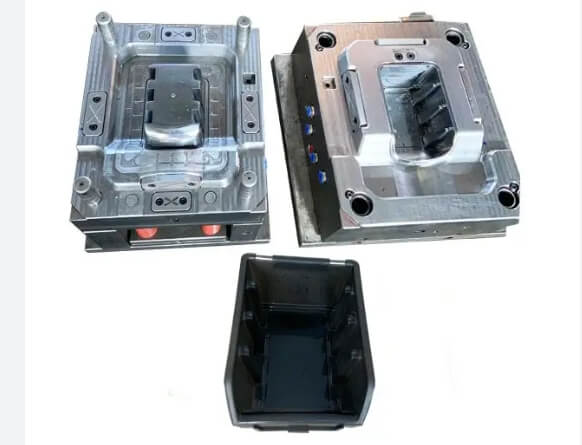 What Affects the Cost of an Aluminum Injection Mold 2026-01-19 0
 What Is the Strength of the 7 Most Common Injection Molding Plastics 2026-01-12 0
 How Thick Can You Injection Mold Plastic 2026-01-12 0
 What Are the 7 Steps of PLC 2025-12-16 0
 What Is PLC in Injection Molding 2025-12-16 0
- What Is the Minimum Wall Thickness of the 7 Main Types of Plastic 2025-12-11 0
 Industry Standards or Guidelines for Wall Thickness by Application 2025-12-11 0
 Why Does Plastic Shrink More in Thick Sections in Injection Molding 2025-12-02 0
 The Strongest Plastic for Injection Molding 2025-12-02 0
- Why is Machine Assistance Essential in High-Demand Mould Shops 2025-11-20 0
 Why Ultrasonic Polishing is Essential for Precision Mould Features 2025-11-12 0
