
What Is the Minimum Wall Thickness of the 7 Main Types of Plastic
What Is the Minimum Wall Thickness of the 7 Main Types of Plastic? A Practical Guide for Designers and Engineers
You’ve got a sleek new product idea. It’s lightweight, compact, and needs to feel premium. So you ask: “How thin can I go?”
That’s a smart—and very common—question. But the answer isn’t one-size-fits-all. Minimum wall thickness depends on the plastic’s flow behavior, strength, cooling rate, and even your part’s geometry. Push too thin, and your part won’t fill. Play it too safe, and you’re wasting material, time, and cost.
At Taizhou HOPO Mould & Plastic Technology Co., Ltd—a professional injection mould maker since 2012, based in Huangyan, Taizhou—we’ve built thousands of moulds for home appliances, automotive parts, daily commodities, and industrial products, from air conditioner grilles to dustbin lids. We know that “minimum” isn’t just a number—it’s the edge of what’s reliably manufacturable.
Let’s walk through the seven most common plastics—and what “thin” really means for each.
1. What’s the Thinnest Wall You Can Mold with Polypropylene (PP)?
PP is one of the most forgiving and widely used resins—especially in buckets, crates, home storage, and appliance interiors. It has excellent flow (high MFI options available) and low moisture sensitivity.
- Practical Minimum Wall Thickness: 0.6 mm
- Realistic Minimum for Functional Parts: 0.8–1.0 mm
Why the gap? While thin-walled PP containers (like yogurt cups) can hit 0.5 mm in high-speed, hot-runner systems, those are optimized for mass production with premium equipment. For most industrial or consumer parts we produce at HOPO—like washing machine tubs or dustbin bodies—we recommend no less than 0.8 mm to ensure consistent filling, adequate stiffness, and no flash at parting lines.
Tip: Use high-flow PP grades (e.g., MFI > 30 g/10min) if you must go below 1.0 mm.
2. How Thin Can You Go with ABS—Without Sacrificing Surface or Strength?
Acrylonitrile Butadiene Styrene (ABS) is the go-to for home appliance housings, control panels, and consumer electronics—thanks to its glossy finish, impact resistance, and paintability.
- Practical Minimum Wall Thickness: 0.9 mm
- Recommended for Structural Integrity: 1.2–1.5 mm
ABS has moderate flow. Below 0.9 mm, you risk short shots, especially in large parts or complex ribs. More critically, thin ABS walls lose impact resistance fast—defeating one of its core advantages.
At HOPO, most air conditioner front panels and refrigerator liners we mould land in the 1.8–2.5 mm range, but for internal brackets or non-load-bearing covers, 1.2 mm is a reliable lower limit—provided you use proper gate design and mould temperature control.
3. Can You Really Mold Polycarbonate (PC) Below 1 mm?
Polycarbonate is strong, transparent, and heat-resistant—but it’s viscous when molten. That makes it tougher to push into thin sections.
- Practical Minimum Wall Thickness: 1.0 mm
- For Optical or High-Impact Parts: 1.5–2.0 mm
While medical or optical PC parts (like lens covers) can reach 0.75 mm using ultra-high-heat, high-pressure systems, these require dried resin (<0.02% moisture), mould temps >100°C, and expert process tuning.
For most applications—like LED housings, safety shields, or appliance windows—HOPO recommends 1.2 mm as the functional floor. Go thinner, and you’ll fight sink, stress cracking, or inconsistent clarity.
4. What’s the Realistic Lower Limit for Polyethylene (HDPE or LDPE)?
Polyethylene—especially HDPE—is used in bottles, caps, buckets, and chemical tanks. It flows well but has low rigidity.
- Minimum Wall Thickness (HDPE): 0.6–0.8 mm
- Minimum Wall Thickness (LDPE): 0.5–0.7 mm
HDPE’s low stiffness means even if you mould a 0.6 mm wall, it may buckle under load. That’s why thin HDPE is reserved for non-structural containers (e.g., shampoo bottles). For industrial crates or outdoor bins—common HOPO products—we never go below 1.5 mm.
Note: HDPE shrinks a lot (1.5–4%). Thin walls amplify warpage. Compensation in the mould is essential.
5. How Thin Can Nylon (PA6 or PA66) Walls Be—Especially When Glass-Filled?
Unfilled nylon flows better than PC but absorbs moisture, which affects dimensions. Glass-filled nylon is stiffer but more abrasive and harder to push into thin sections.
- Unfilled Nylon (PA6/PA66): 0.7–0.9 mm
- 30% Glass-Filled Nylon: 1.0–1.2 mm
Why thicker for GF? Glass fibers increase viscosity and can clog thin flow paths or align poorly, causing weak knit lines.
At HOPO, automotive connectors or power tool housings in glass-filled PA66 typically use 1.5–2.5 mm walls. For unfilled nylon gears or clips, 0.8 mm is achievable—but only with hot runners, high mould temps, and generous radii.
6. Is Acetal (POM) Suitable for Very Thin Walls?
Acetal (POM) is prized for precision mechanical parts: gears, latches, zippers. It’s stiff, low-friction, and dimensionally stable—but not the best for ultra-thin sections.
- Practical Minimum Wall Thickness: 0.8 mm
- Recommended for Functional Parts: 1.0–2.0 mm
Below 0.8 mm, POM’s high crystallinity causes rapid solidification, leading to short shots or internal stresses. Plus, it releases formaldehyde during processing—requiring excellent venting, which is harder in micro-features.
For small appliance gears or drawer sliders, HOPO typically designs POM parts with ≥1.0 mm walls to ensure full replication of fine teeth and long-term fatigue resistance.
7. What About PET or PETG—Can They Go Ultra-Thin Like in Bottles?
Yes—but with a big caveat.
Amorphous PETG (used in 3D printing or sheet) can be injection molded down to 0.75 mm. But crystalline PET (like in water bottles) is rarely injection molded as a final part—it’s usually injection stretch blow molded, a different process.
- Injection-Molded PET (for engineering parts): 1.0–1.5 mm minimum
- PETG (amorphous): 0.8–1.0 mm
Unless you’re making preforms for bottles (which HOPO doesn’t typically handle), PET isn’t common in our home appliance or industrial portfolios. If you’re considering it for a transparent, chemical-resistant part, PC or PMMA may be better choices for thin-wall injection.
Quick Reference: Minimum vs. Recommended Wall Thickness by Material
| Plastic (Common Name) | Typical Applications at HOPO | Absolute Minimum Thickness* | Recommended Minimum for Functional Parts | Key Considerations |
|---|---|---|---|---|
| Polypropylene (PP) | Dustbins, buckets, washing machine tubs, crates | 0.6 mm | 0.8–1.0 mm | Excellent flow; avoid <0.8 mm for structural parts due to low rigidity |
| ABS | Air conditioner housings, control panels, appliance shells | 0.9 mm | 1.2–1.5 mm | Thin walls lose impact strength; needs good surface finish control |
| Polycarbonate (PC) | Transparent windows, safety covers, LED housings | 1.0 mm | 1.2–1.5 mm | High melt viscosity; requires drying and high mould temps |
| HDPE / LDPE | Bottles, chemical tanks, outdoor storage | 0.6 mm (HDPE) 0.5 mm (LDPE) |
1.0–1.5 mm | Low stiffness—thin walls buckle easily; high shrinkage causes warpage |
| Nylon (PA6 / PA66) (Unfilled & 30% GF) |
Gears, automotive brackets, power tool housings | 0.7 mm (unfilled) 1.0 mm (GF) |
0.9–1.2 mm (unfilled) 1.2–1.5 mm (GF) |
GF increases strength but reduces flow; avoid sharp corners in thin sections |
| Acetal (POM) | Precision gears, latches, sliders, zippers | 0.8 mm | 1.0–2.0 mm | High crystallinity = fast solidification; needs excellent venting |
| PET / PETG | Transparent containers, specialty housings | 0.8 mm (PETG) 1.0 mm (PET) |
1.0–1.5 mm | PET is rarely injection-molded as final part; PETG easier but less common in industrial use |
Absolute minimum = technically possible under ideal lab or high-speed conditions (e.g., hot runners, high MFI resin, expert tuning). Not recommended for general production.
Minimum ≠ Recommended
Just because a material can be molded at 0.7 mm doesn’t mean it should be—especially if your part needs to:
- Withstand assembly (snap-fits, screws)
- Survive drop tests
- Maintain appearance over time
- Run efficiently on standard presses
At HOPO Mould, our goal isn’t to push boundaries recklessly—but to optimize your design for reliability, cost, and scalability. We’ve seen too many “theoretically possible” thin-wall parts fail in pilot production due to inconsistent filling or hidden stress cracks.
Our advice? Start with the recommended minimums above. Then, if you need to go thinner, partner with us early. We’ll run mold flow analysis, select the best resin grade, and design a mould that makes “thin” truly work—without compromise.
Located in Huangyan, Taizhou, with 40-minute access to Taizhou Airport and 15 minutes to the railway station, HOPO combines deep local expertise with global standards to serve clients worldwide.
Have a thin-wall part in development? Share your concept with us. We’ll help you find the perfect balance between innovation and manufacturability.
Because in injection molding, the smartest wall isn’t the thinnest—it’s the most thoughtful one.
Related Articles
 The Top Injection Molding Industry Leader 2026-02-24 0
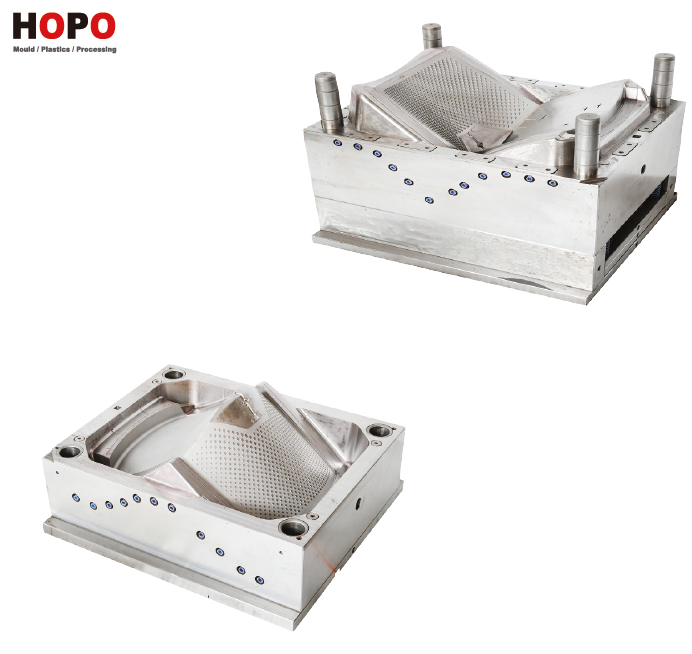 2026 Injection Molding Industry Leader 2026-02-24 0
 USA Top Custom Moulding Experts 2026-02-11 0
 2026 Architectural and Decorative Moulding Leaders in USA 2026-02-11 0
 2026 Top Industrial Plastic Injection Moulding Titans 2026-02-02 0
- 2026 Top Moulding Company 2026-02-02 0
- What Is an Aluminum Injection Mold and Why Is It Used 2026-01-19 0
 How Does Aluminum Material Grade Impact Mold Cost 2026-01-19 0
 The Cost of an Aluminum Injection Mold 2026-01-19 0
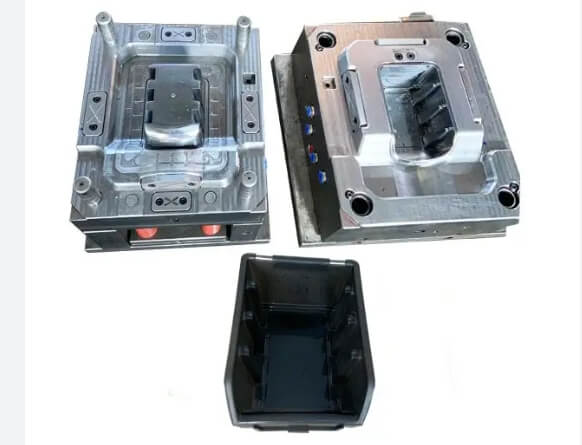 What Affects the Cost of an Aluminum Injection Mold 2026-01-19 0
 What Is the Strength of the 7 Most Common Injection Molding Plastics 2026-01-12 0
 How Thick Can You Injection Mold Plastic 2026-01-12 0
 What Are the 7 Steps of PLC 2025-12-16 0
 What Is PLC in Injection Molding 2025-12-16 0
 Industry Standards or Guidelines for Wall Thickness by Application 2025-12-11 0
 Why Does Plastic Shrink More in Thick Sections in Injection Molding 2025-12-02 0
 The Strongest Plastic for Injection Molding 2025-12-02 0
- Why is Machine Assistance Essential in High-Demand Mould Shops 2025-11-20 0
 Common Defects and Limitations Must Mold Finishers Anticipate with CP 2025-11-20 0
 Why Ultrasonic Polishing is Essential for Precision Mould Features 2025-11-12 0
