
What Affects the Cost of an Aluminum Injection Mold
What Affects the Cost of an Aluminum Injection Mold?
Aluminum injection molds are widely used for prototyping, bridge tooling, and low- to medium-volume production. While they are often promoted as a “lower-cost” alternative to steel molds, the actual cost can vary significantly depending on engineering, design, and production decisions.
This guide breaks down what truly affects the cost of an aluminum injection mold, from design complexity to expected mold life—so engineers and tooling managers can make informed, cost-effective decisions.
What Is an Aluminum Injection Mold and Why Is It Used?
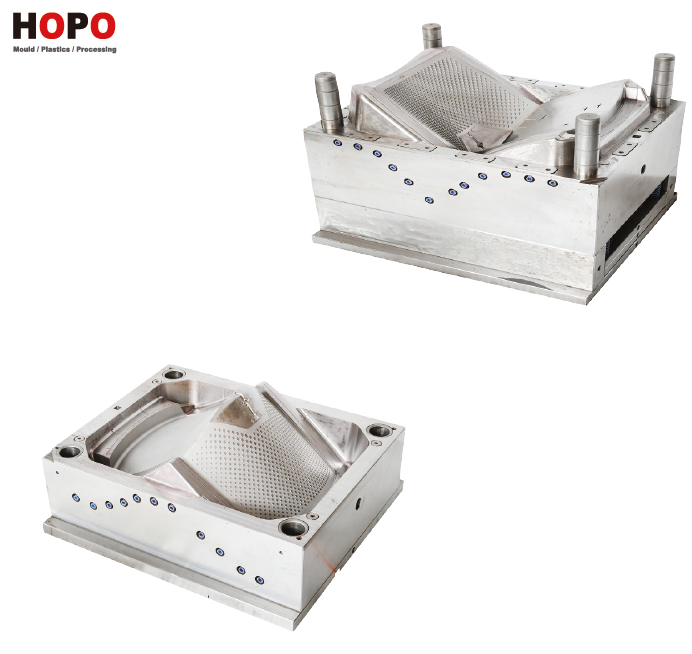
An aluminum injection mold is a tooling solution machined primarily from aluminum alloys instead of hardened steel. It is commonly used for faster lead times, lower upfront cost, and shorter production runs.
Engineers choose aluminum molds because they:
- Machine faster than steel
- Offer excellent thermal conductivity
- Reduce tooling cost for early-stage or short-run projects
However, “lower cost” does not mean “fixed cost.” Several technical variables directly influence the final price.
How Does Mold Design Complexity Affect the Cost?
Mold design complexity is one of the largest cost drivers in aluminum injection molding.
Complex features increase cost because they require:
- More CNC machining time
- Additional EDM operations
- Tighter tolerances and inspection
- Higher risk of design revisions
Design elements that raise mold cost include:
- Undercuts and side actions
- Thin walls or sharp internal corners
- Tight dimensional tolerances
- Poor draft or non-uniform wall thickness
From a cost perspective, good DFM (Design for Manufacturability) can reduce aluminum mold pricing dramatically.
How Does Mold Size and Cavity Count Influence Pricing?
The size of the mold and the number of cavities directly affect material usage, machining time, and mold base cost.
In general:
- Larger molds require more aluminum stock and longer machining cycles
- Multi-cavity molds increase tooling complexity but reduce part cost per unit
For aluminum molds, engineers often balance:
- Lower upfront cost (single cavity)
- Higher productivity (multi-cavity)
The optimal choice depends on projected production volume and part demand.
How Does Aluminum Material Grade Impact Mold Cost?
Aluminum material grade has a direct and often underestimated impact on the total cost of an injection mold. While material price is only one line item in a tooling quote, the performance characteristics of the aluminum grade influence machining time, mold durability, maintenance frequency, and ultimately the cost per molded part.
Higher-grade aluminum alloys:
- Offer better wear resistance
- Maintain dimensional stability longer
- Extend mold life
Lower-cost aluminum grades:
- Machine faster
- Reduce initial tooling expense
- May wear out sooner under high injection pressure
Choosing the right grade is a cost-versus-longevity decision, not simply a material price comparison. From an engineering perspective, choosing the right aluminum grade is not about selecting the cheapest option—it’s about matching material behavior to the application, resin, and expected mold life.
How Do Machining Processes Affect Aluminum Mold Pricing?
Machining time is a major contributor to mold cost—even with aluminum’s excellent machinability.
Cost increases with:
- Multi-axis CNC machining
- Deep cavity milling
- EDM polishing or texturing
- Manual fitting and finishing work
While aluminum machines faster than steel, complex geometry can quickly offset that advantage.
How Do Tolerance and Surface Finish Requirements Increase Costs?
Tighter tolerances and higher surface finish standards significantly raise mold cost.
This is because they require:
- Slower machining speeds
- Additional polishing steps
- More inspection and quality control
For cosmetic or optical parts, polishing requirements alone can account for a substantial portion of tooling cost.
Engineers should only specify tight tolerances or mirror finishes where function truly requires them.
How Does Expected Mold Life Affect the Total Cost?
Aluminum molds typically have a shorter service life than steel molds, but expected shot life plays a major role in cost planning.
Factors influencing mold life include:
- Injection pressure and temperature
- Resin abrasiveness (glass-filled vs unfilled)
- Use of steel inserts in wear areas
A lower-cost aluminum mold may become more expensive over time if frequent repairs or replacements are required.
How Does Production Volume Influence Aluminum Mold Cost Decisions?
Production volume determines whether aluminum tooling is cost-effective in the first place.
Aluminum molds are ideal for:
- Prototypes
- Bridge tooling
- Low- to medium-volume production
As volumes increase, steel molds often provide a lower cost per part—even with higher upfront tooling expense.
Engineers should evaluate total lifecycle cost, not just mold price.
How Do Cooling System Design and Mold Features Affect Cost?
Cooling design impacts both mold cost and production efficiency.
More advanced cooling systems:
- Increase machining complexity
- Raise tooling cost
- Reduce cycle time and part cost
Aluminum’s thermal conductivity can offset simpler cooling designs, but complex parts may still require additional cooling features.
How Does Mold Maintenance and Repair Factor into Overall Cost?
Maintenance is often overlooked during cost evaluation.
Aluminum molds:
- Are easier to modify and repair
- Wear faster in high-stress areas
- May require more frequent refurbishment
Long-term cost should include maintenance downtime, not just tooling price.
How Does Supplier Capability and Location Affect Mold Pricing?
Tooling suppliers influence cost through:
- Engineering support and DFM quality
- In-house machining capabilities
- Experience with aluminum tooling
Lower-cost quotes may hide:
- Poor design optimization
- Limited quality control
- Higher revision or repair costs later
For engineers, supplier capability often matters more than initial price.
How Can Engineers Reduce the Cost of an Aluminum Injection Mold?
Cost reduction starts in the design phase.
Effective strategies include:
- Simplifying part geometry
- Improving draft and wall uniformity
- Avoiding unnecessary tight tolerances
- Involving mold suppliers early in design
Small design changes can lead to large tooling savings.
How Should Engineers Decide If an Aluminum Mold Is Worth the Cost?
An aluminum injection mold is worth the cost when:
- Production volume is limited or uncertain
- Speed to market is critical
- Design changes are likely
- Lifecycle cost aligns with project goals
The best decision is rarely about tooling price alone—it’s about engineering fit, production strategy, and long-term value.
Final Takeaway
The cost of an aluminum injection mold is shaped by design decisions, material choices, machining complexity, and production requirements. Engineers who understand these factors can control tooling cost without sacrificing performance or quality.
Related Articles
 The Top Injection Molding Industry Leader 2026-02-24 0
 2026 Injection Molding Industry Leader 2026-02-24 0
 USA Top Custom Moulding Experts 2026-02-11 0
 2026 Architectural and Decorative Moulding Leaders in USA 2026-02-11 0
 2026 Top Industrial Plastic Injection Moulding Titans 2026-02-02 0
- 2026 Top Moulding Company 2026-02-02 0
- What Is an Aluminum Injection Mold and Why Is It Used 2026-01-19 0
 How Does Aluminum Material Grade Impact Mold Cost 2026-01-19 0
 The Cost of an Aluminum Injection Mold 2026-01-19 0
 What Is the Strength of the 7 Most Common Injection Molding Plastics 2026-01-12 0
 How Thick Can You Injection Mold Plastic 2026-01-12 0
 What Are the 7 Steps of PLC 2025-12-16 0
 What Is PLC in Injection Molding 2025-12-16 0
- What Is the Minimum Wall Thickness of the 7 Main Types of Plastic 2025-12-11 0
 Industry Standards or Guidelines for Wall Thickness by Application 2025-12-11 0
 Why Does Plastic Shrink More in Thick Sections in Injection Molding 2025-12-02 0
 The Strongest Plastic for Injection Molding 2025-12-02 0
- Why is Machine Assistance Essential in High-Demand Mould Shops 2025-11-20 0
 Common Defects and Limitations Must Mold Finishers Anticipate with CP 2025-11-20 0
 Why Ultrasonic Polishing is Essential for Precision Mould Features 2025-11-12 0
