
The Cost of an Aluminum Injection Mold
What’s the Cost of an Aluminum Injection Mold?
A Realistic Guide for Product Teams Weighing Speed, Budget, and Production Needs
If you’re developing a new plastic part—maybe a smart home device housing, a limited-run appliance component, or a prototype for investor testing—you’ve probably heard this advice:
“Just get an aluminum mold—it’s fast and cheap!”
But is it really that simple? And more importantly: Is an aluminum injection mold the right choice for your project?
At HOPO Mould, we’ve built thousands of steel and aluminum molds since 2012 for clients across home appliances, automotive, and consumer goods. We’ve seen startups succeed with aluminum—and others face costly delays when it wasn’t the right fit.
So let’s cut through the hype. Below, we break down everything you need to know about aluminum injection mold costs, including what drives pricing, where it makes sense, and when you might regret choosing it.
What Exactly Is an Aluminum Injection Mold?
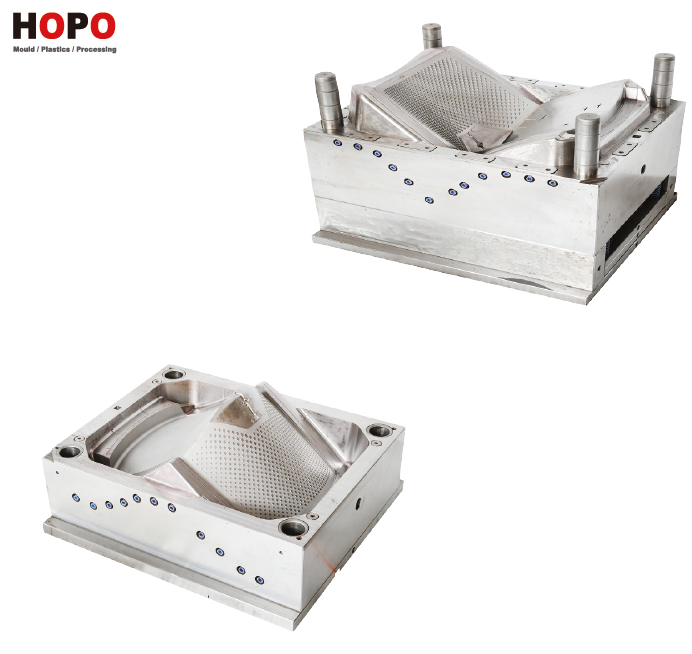
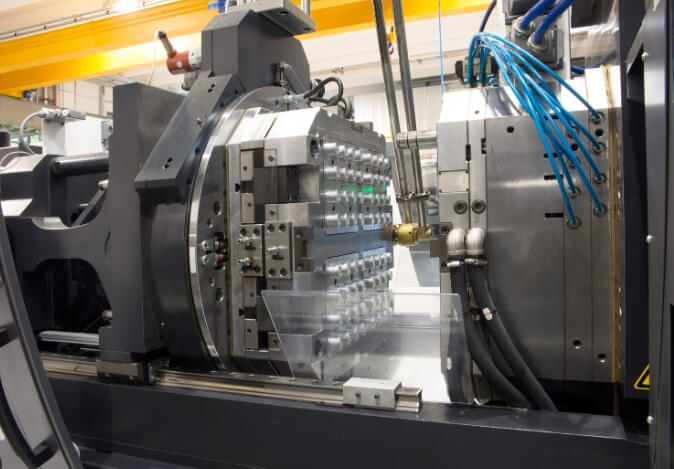
An aluminum injection mold is a tool made primarily from aluminum alloys (like 7075 or QC-10) instead of hardened steel. It’s used to produce plastic parts via injection molding—but designed for lower volumes, faster turnaround, and lower upfront investment.
Unlike steel molds that can run millions of cycles, aluminum molds are typically rated for 500 to 10,000 shots, depending on the resin, part geometry, and process conditions. They’re softer, easier to machine, and respond well to CNC and EDM—but they wear faster, especially with abrasive or glass-filled materials.
Think of aluminum molds as the sprinters of the molding world: fast off the line, but not built for marathons.
How Much Does an Aluminum Injection Mold Actually Cost?
The short answer: $3,000 to $25,000 USD—but that range hides critical details.
Here’s what really drives the price:
- Part complexity: Simple, flat geometries with minimal undercuts cost far less than parts with side actions, lifters, or deep cores.
- Number of cavities: A single-cavity mold may cost $5,000; a 4-cavity version could be $18,000+.
- Surface finish: A basic machined finish is cheap; polished, textured, or VDI-certified surfaces add cost.
- Mold base quality: Off-the-shelf bases save money; custom or hardened components raise the price.
- Location of manufacturer: A mold from a trusted Chinese supplier (like HOPO) may cost 30–50% less than one from North America or Western Europe—with comparable quality for prototyping.
At HOPO, a typical single-cavity aluminum mold for a medium-complexity home appliance part (e.g., a control panel cover) runs $6,000–$10,000, delivered, with a 3–4 week lead time.
Is an Aluminum Mold Always Cheaper Than Steel?
Not necessarily—and this is where many teams get tripped up.
Yes, upfront cost is lower for aluminum. But if you need more than 10,000 parts, the math flips:
- An aluminum mold might wear out by shot #8,000, forcing a second mold investment.
- A pre-hardened steel mold (like P20) costs more initially ($15,000–$40,000+) but can produce 500,000+ parts with minimal maintenance.
- Aluminum molds also limit your material choices—you can’t safely run glass-filled nylon or PEEK without rapid erosion.
So while aluminum saves money early, it can cost more per part over time if your volume grows.
Rule of thumb: Choose aluminum only if you’re certain your total volume will stay under 5,000–10,000 units.
What Types of Parts Are Best Suited for Aluminum Molds?
Aluminum shines in specific scenarios—not all.
✅ Great fits:
- Prototype validation (functional or market testing)
- Limited-edition consumer products (e.g., seasonal items)
- Low-volume medical or electronics housings (non-critical)
- Parts made from non-abrasive resins: ABS, PP, HDPE, PC, PLA
❌ Poor fits:
- Automotive structural components (require long life + filled materials)
- Parts with glass fiber, minerals, or high melt temps
- Mass production runs (>10k units)
- Components requiring high surface polish or tight tolerances over time
At HOPO, we often recommend aluminum for pre-series validation—then switch to steel for full production. It’s a smart “fail fast, scale smart” strategy.
How Does Aluminum Affect Part Quality and Consistency?
This is the hidden trade-off.
Aluminum has high thermal conductivity, which sounds great—it cools parts faster, reducing cycle time. But it also means:
- Less control over cooling uniformity, leading to warpage in uneven geometries.
- Softer surfaces that scratch easily, affecting cosmetic finishes.
- Faster wear at gates, ejector pins, and sharp corners—causing flash or dimensional drift after a few thousand shots.
If your part needs Class A surface finish or ±0.05mm tolerances over 5,000 shots, aluminum may struggle to deliver consistent quality.
That said—for internal components or non-cosmetic parts—aluminum performs beautifully.
Can You Really Get a High-Quality Aluminum Mold from China?
Yes—if you choose the right partner.
There’s a myth that “cheap” means “low quality.” But in China’s Huangyan mould cluster (where HOPO is based), decades of specialization have created a mature ecosystem of CNC shops, EDM experts, and mold flow analysts.
We’ve shipped aluminum molds to clients in Germany, the U.S., and Australia that:
- Passed rigorous quality checks
- Produced 8,000+ flawless ABS housings
- Cost 40% less than local quotes
The key is working with a supplier who:
- Uses aerospace-grade aluminum (e.g., 7075-T6)
- Validates designs with mold flow simulation
- Offers clear communication and DFM feedback
At HOPO, we treat aluminum molds with the same engineering rigor as steel—because your success depends on it.
So… Should You Choose an Aluminum Injection Mold?
Ask yourself these questions:
- What’s my total production volume? (<5k = maybe yes; >15k = probably no)
- What material am I using? (Unfilled = OK; glass-filled = avoid)
- How critical is part consistency? (Prototype = flexible; end-product = strict)
- What’s my timeline? (Need parts in 4 weeks? Aluminum wins.)
- What’s my total budget—including potential re-tooling?
If your answers point to speed, flexibility, and low volume, aluminum could be your best ally.
But if you’re scaling a product with market potential, consider this hybrid path:
Start with aluminum for validation → move to steel for scale.
Ready to Explore Your Options with a Trusted Partner?
At Taizhou HOPO Mould & Plastic Technology Co., Ltd, we don’t push aluminum—or steel. We listen, analyze your needs, and recommend the right tool for your stage and strategy.
Located in Huangyan—China’s mould-making capital—we offer:
- 3–4 week lead times on aluminum molds
- Mold flow analysis included
- Transparent pricing with no hidden fees
- Full production support (injection molding, assembly, shipping)
With Taizhou Airport just 40 minutes away and the railway station 15 minutes from our facility, we make global collaboration seamless.
Have a part in mind? Send us your 3D file—and we’ll give you a realistic quote, timeline, and honest advice on whether aluminum is your smartest move.
Because at HOPO, we believe the best mold isn’t the cheapest or fastest—it’s the one that helps you win in the market.
Related Articles
 The Top Injection Molding Industry Leader 2026-02-24 0
 2026 Injection Molding Industry Leader 2026-02-24 0
 USA Top Custom Moulding Experts 2026-02-11 0
 2026 Architectural and Decorative Moulding Leaders in USA 2026-02-11 0
 2026 Top Industrial Plastic Injection Moulding Titans 2026-02-02 0
- 2026 Top Moulding Company 2026-02-02 0
- What Is an Aluminum Injection Mold and Why Is It Used 2026-01-19 0
 How Does Aluminum Material Grade Impact Mold Cost 2026-01-19 0
 What Affects the Cost of an Aluminum Injection Mold 2026-01-19 0
 What Is the Strength of the 7 Most Common Injection Molding Plastics 2026-01-12 0
 How Thick Can You Injection Mold Plastic 2026-01-12 0
 What Are the 7 Steps of PLC 2025-12-16 0
 What Is PLC in Injection Molding 2025-12-16 0
- What Is the Minimum Wall Thickness of the 7 Main Types of Plastic 2025-12-11 0
 Industry Standards or Guidelines for Wall Thickness by Application 2025-12-11 0
 Why Does Plastic Shrink More in Thick Sections in Injection Molding 2025-12-02 0
 The Strongest Plastic for Injection Molding 2025-12-02 0
- Why is Machine Assistance Essential in High-Demand Mould Shops 2025-11-20 0
 Common Defects and Limitations Must Mold Finishers Anticipate with CP 2025-11-20 0
 Why Ultrasonic Polishing is Essential for Precision Mould Features 2025-11-12 0
