
All You Would Like To Know About Household Commodity Mould Suppliers
Overview of Household Commodity Mould Suppliers
Household commodity mould suppliers play a crucial role in the manufacturing industry. They are the providers of molds needed to produce various everyday items, including but not limited to plastic containers, household items, kitchen utensils, and more. The quality and precision of these molds directly impact the quality and performance of the final products, making the selection of suitable household goods mould suppliers essential.
Household commodity mould suppliers typically possess extensive experience and specialized knowledge. They can design and manufacture various types of molds according to customer requirements. They understand the characteristics of different materials, are familiar with various processing techniques, and can provide customized designs as per customer specifications. Compared to other types of mould suppliers, household goods mould suppliers pay more attention to detail and precision because everyday items often require highly accurate molds to ensure product quality and appearance.
Furthermore, household commodity mould suppliers need to continuously innovate and enhance their technical capabilities to meet the increasing demands for product quality and performance in the market. They closely monitor industry trends, actively introduce advanced manufacturing equipment and processes, continuously optimize production processes, improve production efficiency, and product quality. At the same time, they also need to maintain close cooperation with customers, understand their needs and feedback, continuously improve and optimize product designs to ensure products meet market demands and customer expectations.
Manufacturing Process of Household Commodity Mould
The manufacturing process of household commodity molds is a complex and intricate process involving multiple stages and technologies. Here is a brief overview:
A. Design Stage: The manufacturing process of household commodity molds typically begins with the design stage. In this stage, engineers and designers use Computer-Aided Design (CAD) software to create three-dimensional models of the molds. They design mold structures and shapes according to customer requirements and product functional characteristics. During the design process, factors such as product dimensions, material selection, injection molding process, etc., need to be considered to ensure that the final mold meets production requirements and quality standards.
B. Manufacturing Process:
Material Preparation: Selecting suitable mold materials is the first step in the manufacturing process. Common mold materials include steel, aluminum alloys, etc., chosen based on mold usage requirements and production costs.
Machining: Mold machining typically involves various processes such as CNC machining, milling, turning, EDM, etc. Through precision machining, the designed three-dimensional mold model is transformed into actual mold parts.
Assembly and Debugging: The machined mold parts are assembled and debugged, and then tested. In this stage, it is essential to ensure the precision and fit of each mold part to ensure the normal operation and stability of the mold.
Trial Molding Inspection: After completing the mold assembly, trial molding inspection is conducted. Through mold trial molding, the performance and precision of the mold are inspected to ensure compliance with design requirements and identify and resolve any potential issues.
Production Commissioning: After passing the trial molding inspection, the mold is officially put into production. During the production process, regular maintenance and upkeep of the mold are necessary to ensure its long-term stable operation and continuous optimization of performance.
Each stage of the manufacturing process of household commodity molds requires high levels of expertise and technology. Any mistake in any stage can affect the quality and performance of the final product. Therefore, the manufacturing of household commodity molds requires an experienced professional team and advanced processing equipment to ensure that the molds meet customer needs and market requirements.
Trends and Challenges in the Household Commodity Mould Industry
The household commodity mould industry is facing various trends and challenges, understanding and addressing these trends and challenges is crucial for industry participants.
A. Market Trends:
Smartization: With the continuous development of technology, the demand for smart household commodity molds is growing. Smart molds can realize functions such as automated production, remote monitoring, and data analysis, improving production efficiency and product quality.
Customization: Consumer demand for personalized and customized products is increasing, driving the household commodity mould industry towards customization. Household goods mould suppliers need to provide customized designs and manufacturing services according to customer requirements to meet diverse customer needs.
B. Industry Challenges:
Technological Updates: The household commodity mould industry undergoes rapid technological updates, requiring continuous adoption of new technologies, materials, and processes to maintain competitiveness. Additionally, technological updates also necessitate ongoing training and skill updates for employees to adapt to new production requirements.
Competitive Pressure: The household commodity mould industry faces fierce competition, with competition primarily focused on product quality, price, and delivery time. Suppliers need to continuously improve product quality and service levels to win customer trust and orders.
Facing the trends and challenges of the household commodity mould industry, suppliers need to adapt flexibly, continuously innovate, and enhance their technical capabilities and service levels. Only by keeping pace with the times and continuously improving their competitiveness can they stand firm in the household commodity mould market.
How to Choose Household Commodity Mould Suppliers
Choosing the right household commodity mould supplier is crucial for enterprises because the supplier selection directly impacts key factors such as product quality, delivery time, and cost-effectiveness. Here are some suggestions for choosing household goods mould suppliers:
A. Product Quality:
Quality Certification: Ensure that the selected supplier has relevant quality certifications, such as ISO9001, etc. These certifications demonstrate the supplier's professionalism and reliability in quality management.
Sample Inspection: Before formal cooperation, you can request samples from the supplier for inspection. Evaluating the quality and performance of samples can preliminarily judge the supplier's product quality level.
B. Service Level:
After-Sales Service: Understand the supplier's after-sales service level, including whether they provide technical support, maintenance, etc. Timely after-sales service can help enterprises solve production problems and ensure uninterrupted production.
Communication: Establishing good communication and cooperation with the supplier is crucial. Choosing a supplier who can respond promptly and understand enterprise needs can help maintain smooth and efficient cooperation.
C. Cost Effectiveness:
Comprehensive Cost Consideration: In addition to product price, other costs such as transportation costs, after-sales service costs, etc., need to be considered. Considering various costs, choose the most cost-effective supplier.
Long-Term Cooperation: Establishing long-term stable cooperation can help obtain better prices and service conditions. Therefore, consider choosing suppliers willing to cooperate with enterprises for the long term.
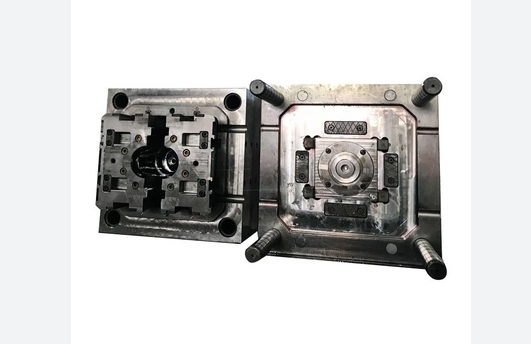
Introduction to HOPO's Household Commodity Mould Products
HOPO was established in 2012, headquartered in Zhejiang, China. It possesses a modern production plant and a highly experienced, technically proficient R&D team. The company adheres to the business philosophy of "quality first, customer foremost," continually pursuing technological innovation and enhancing product quality.
B. Product Series: HOPO's household commodity mould products cover various fields, including but not limited to:
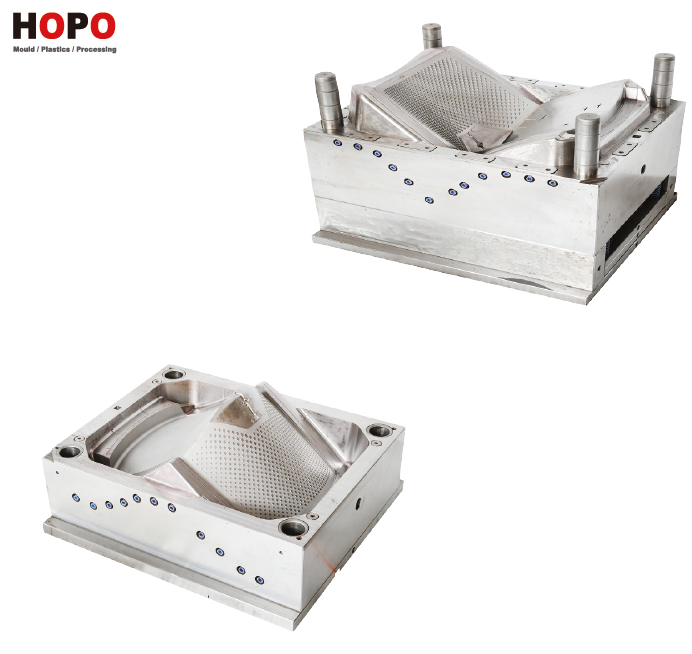
Plastic Container Mould: HOPO boasts advanced plastic container mould manufacturing technology, capable of customizing various specifications and shapes of plastic container moulds according to customer requirements, such as bottle cap moulds, food container moulds, etc. Household Items Moulds: HOPO designs and manufactures various household moulds, such as trash can moulds, laundry basket moulds, etc., with innovative designs and reliable quality. Kitchen Utensils Moulds: HOPO also provides various kitchen utensils moulds, such as kettle moulds, tableware moulds, etc., featuring high durability and safety.
HOPO, with its advanced technical equipment, extensive experience, and professional team, is committed to providing customers with high-quality household commodity mould products and one-stop solutions. Whether in terms of product quality, technological innovation, or customer service, HOPO will continuously strive for excellence, making greater contributions to the development of the household commodity industry.
Related Articles
 The Top Injection Molding Industry Leader 2026-02-24 0
 2026 Injection Molding Industry Leader 2026-02-24 0
 USA Top Custom Moulding Experts 2026-02-11 0
 2026 Architectural and Decorative Moulding Leaders in USA 2026-02-11 0
 2026 Top Industrial Plastic Injection Moulding Titans 2026-02-02 0
- 2026 Top Moulding Company 2026-02-02 0
- What Is an Aluminum Injection Mold and Why Is It Used 2026-01-19 0
 How Does Aluminum Material Grade Impact Mold Cost 2026-01-19 0
 The Cost of an Aluminum Injection Mold 2026-01-19 0
 What Affects the Cost of an Aluminum Injection Mold 2026-01-19 0
 What Is the Strength of the 7 Most Common Injection Molding Plastics 2026-01-12 0
 How Thick Can You Injection Mold Plastic 2026-01-12 0
 What Are the 7 Steps of PLC 2025-12-16 0
 What Is PLC in Injection Molding 2025-12-16 0
- What Is the Minimum Wall Thickness of the 7 Main Types of Plastic 2025-12-11 0
 Industry Standards or Guidelines for Wall Thickness by Application 2025-12-11 0
 Why Does Plastic Shrink More in Thick Sections in Injection Molding 2025-12-02 0
 The Strongest Plastic for Injection Molding 2025-12-02 0
- Why is Machine Assistance Essential in High-Demand Mould Shops 2025-11-20 0
 Common Defects and Limitations Must Mold Finishers Anticipate with CP 2025-11-20 0
