
Challenges in Custom Plastic Part Manufacturing What You Need to Know
author: HOPO MOULD
2025-01-06
Custom plastic parts are integral to a wide range of industries, providing innovation, flexibility, and tailored solutions that standard components cannot offer. However, creating these unique parts presents a host of challenges throughout the design, production, and delivery phases. This article dives deep into the primary hurdles faced by manufacturers and how they work to overcome these obstacles.
1. The Complexity of Custom Designs
Creating a custom plastic part often starts with an idea that must be transformed into a functional product. This journey is rarely straightforward due to several challenges in design.
- Design Hurdles: Intricate designs may require complex geometries such as undercuts, thin walls, and precise tolerances that demand specialized tooling and advanced processing techniques. In addition, balancing aesthetics, structural integrity, and functionality requires detailed attention.
- Prototyping Woes: Prototyping is a crucial step to refine designs and identify potential weaknesses. Multiple iterations are often necessary to fine-tune the dimensions, material behavior, and performance under real-world conditions. Each redesign can introduce new variables and require modifications to the tooling, adding time and cost to the process.
Solutions: To address these challenges, manufacturers frequently use CAD software, simulation tools, and rapid prototyping technologies like 3D printing. These tools reduce the number of physical prototypes needed, lowering costs and accelerating product development cycles. Collaborating with design engineers early in the process also minimizes costly redesigns.
2. The Investment Conundrum(Tooling and Mold Costs)
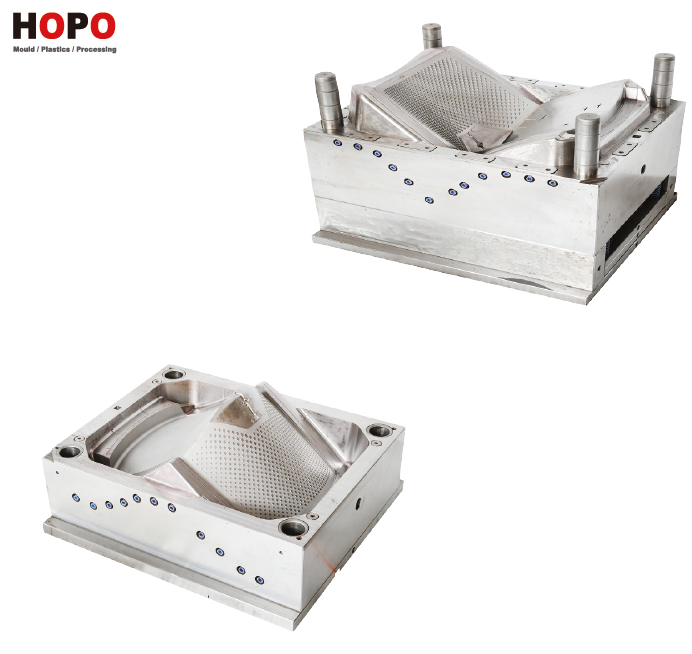
Tooling and molds are the heart of custom plastic part production, but they come with significant upfront costs that can deter customers and impact budgets.
- Price Tag Shock: Custom molds often involve precise machining and engineering expertise, resulting in initial costs ranging from several thousand to hundreds of thousands of dollars, depending on complexity. Clients with limited budgets may struggle to justify this expenditure, especially for low-volume production runs.
- Mold Durability and Lifespan: Even the best molds experience wear over time, leading to dimensional inconsistencies, defects, and a shortened product life cycle. Addressing wear requires maintenance, repair, or even complete replacement, leading to additional costs.
How to Deal? To mitigate high costs, manufacturers can explore modular mold designs that allow interchangeable components, reducing the need for new molds for each variation. Investing in high-quality mold materials, regular mold maintenance, and predictive maintenance tools ensures prolonged durability and cost efficiency. Manufacturers may also offer financing or leasing options to help customers manage the upfront tooling expenses.
3. The Material Selection Balancing Act
Choosing the right plastic material for custom parts is a complex balancing act that directly impacts performance, durability, and cost.
- Performance vs. Price: High-performance plastics, such as PEEK, polycarbonate, or fluoropolymers, offer exceptional properties like heat resistance, electrical conductivity, or chemical stability. However, these materials often come at a higher price than commodity plastics like polyethylene or ABS. Balancing these trade-offs is crucial to meet both customer and application needs.
- Additives and Compatibility: Colorants, fillers, and other additives can significantly alter a plastic’s properties to achieve specific mechanical, aesthetic, or thermal characteristics. However, they can also introduce compatibility issues, affect flow behavior during molding, and impact the final part’s strength or appearance.
Pro Tip: Close collaboration between designers, material scientists, and manufacturers helps select the best material mix while maintaining cost control. Comprehensive testing ensures that the chosen materials meet functional requirements without compromising manufacturability.
4. Manufacturing and Process Hurdles
Manufacturing custom plastic parts involves precision and consistency across every stage of the process, from molding to finishing. Any slight deviation can lead to defects or waste.
- Injection Molding Glitches: Common issues during injection molding include warping, sink marks, voids, and surface defects. These imperfections can arise due to factors such as uneven cooling, excessive pressure, or improper mold design, leading to part rejection and wasted material.
- Achieving Precision: Custom parts often have tight tolerances that leave little room for error. Shrinkage, temperature variations, and tool wear can introduce dimensional inaccuracies, especially in high-volume production.
Navigating the Process: Leveraging real-time process monitoring systems, automated feedback loops, and mold-flow analysis software ensures precise control of each step. Manufacturers also adopt lean manufacturing principles and invest in multi-cavity molds to improve efficiency and reduce scrap rates.
5. The Devil’s in the Details(Quality Control )
Custom plastic parts often require high standards for quality, especially in industries like automotive, aerospace, and medical devices.
- Consistency Headaches: Variability in raw material properties, environmental conditions, or machine calibration can lead to batch-to-batch inconsistencies. For critical applications, even slight deviations can result in product recalls or failed components.
- Rigorous Inspection Demands: Meeting tight tolerances and quality standards involves comprehensive inspections using tools like coordinate measuring machines (CMMs), optical scanners, and other precision metrology equipment. These inspections can add time and cost but are necessary to maintain part integrity.
Solution: Many manufacturers use automated inspection systems that quickly scan parts and compare them to CAD models, identifying defects faster than manual methods. Statistical process control (SPC) techniques can monitor production trends and spot potential issues early, preventing defects from spreading.
6. Managing Costs
Cost management is one of the most challenging aspects of custom plastic part manufacturing, especially with small production runs.
- Small Runs, Big Cost: Custom orders often entail small batch sizes, which results in high per-unit costs compared to mass production. This creates challenges in meeting customer pricing expectations while maintaining profitability.
- Balancing Cost and Quality: While cost-cutting is tempting, reducing the quality of molds, materials, or inspection steps can lead to subpar parts. Striking a balance that meets customer requirements without breaking the bank is essential.
A Way Forward: Manufacturers can adopt just-in-time (JIT) manufacturing practices to minimize waste and inventory holding costs. Leveraging economies of scale for similar part orders and offering volume discounts can also help customers save money.
7. Keeping Up with Tech Advances
Technological advancements continue to transform custom plastic manufacturing processes and capabilities.
- Training Investments: Advanced manufacturing equipment often requires specialized skills and extensive training. Hiring and retaining a workforce with expertise in modern software and machinery is challenging but crucial.
- Real-Time Data Integration: Integrating Industry 4.0 technologies and real-time monitoring solutions enables manufacturers to optimize processes, identify inefficiencies, and reduce downtime. However, implementation can be complex and costly.
Industry Tip: Regular training, partnerships with technology providers, and continuous improvement initiatives help keep manufacturers at the forefront of innovation.
8. Sustainability It’s Not Just a Buzzword
The push toward greener manufacturing practices has changed how custom plastic parts are produced, emphasizing reducing waste and resource usage.
- Minimizing Waste: Custom production often creates waste from excess material, scrapped parts, or rejected batches. Recycling programs and optimization of mold designs help minimize this impact.
- Energy Efficiency: Plastic manufacturing processes, such as injection molding, can consume significant amounts of energy. Reducing energy consumption through the use of efficient equipment and incorporating renewable energy sources can reduce a facility’s carbon footprint.

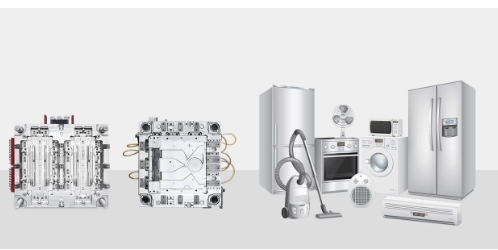
TAIZHOU HOPO MOULD & PLASTIC TECHNOLOGY CO., LTD is a professional plastic injection mould maker and relevant plastic products manufacturer established in 2012. Our Factory is in Zhejiang, China. We enjoy convenient land, water and air transportation, so we could provide short delivery time once the production finished. HOPO offer many kinds of high quality moulds, including daily use commodity moulds, home appliance moulds, automotive moulds, pipe fitting moulds and industrial products moulds, also could directy offer you those relevant plastic parts prodcution.
Related Articles
 The Top Injection Molding Industry Leader 2026-02-24 0
 2026 Injection Molding Industry Leader 2026-02-24 0
 USA Top Custom Moulding Experts 2026-02-11 0
 2026 Architectural and Decorative Moulding Leaders in USA 2026-02-11 0
 2026 Top Industrial Plastic Injection Moulding Titans 2026-02-02 0
- 2026 Top Moulding Company 2026-02-02 0
- What Is an Aluminum Injection Mold and Why Is It Used 2026-01-19 0
 How Does Aluminum Material Grade Impact Mold Cost 2026-01-19 0
 The Cost of an Aluminum Injection Mold 2026-01-19 0
 What Affects the Cost of an Aluminum Injection Mold 2026-01-19 0
 What Is the Strength of the 7 Most Common Injection Molding Plastics 2026-01-12 0
 How Thick Can You Injection Mold Plastic 2026-01-12 0
 What Are the 7 Steps of PLC 2025-12-16 0
 What Is PLC in Injection Molding 2025-12-16 0
- What Is the Minimum Wall Thickness of the 7 Main Types of Plastic 2025-12-11 0
 Industry Standards or Guidelines for Wall Thickness by Application 2025-12-11 0
 Why Does Plastic Shrink More in Thick Sections in Injection Molding 2025-12-02 0
 The Strongest Plastic for Injection Molding 2025-12-02 0
- Why is Machine Assistance Essential in High-Demand Mould Shops 2025-11-20 0
 Common Defects and Limitations Must Mold Finishers Anticipate with CP 2025-11-20 0
