
How to Avoid Weld Lines in Injection Molding
author: CHEN
2025-04-07
What Are Weld Lines in Injection Molding?
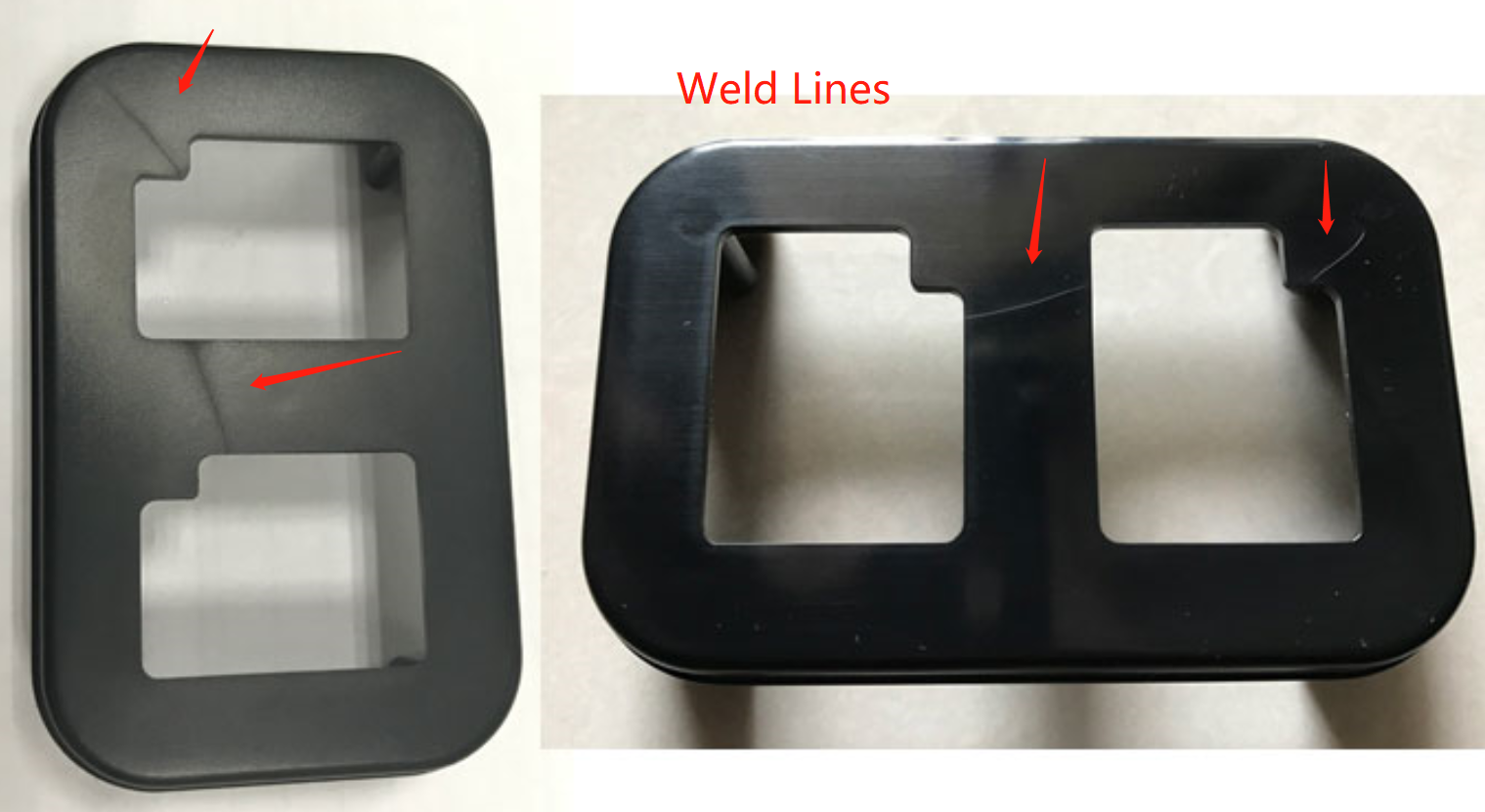
Weld lines, also known as knit lines or cold joints, are visible lines or marks that appear on the surface of injection-molded parts where two or more flow fronts of molten plastic meet. These lines can affect the aesthetic and structural integrity of the part, often leading to weakened areas, cosmetic defects, and reduced functionality. Weld lines are a common challenge in injection molding and must be controlled to maintain the quality of the final product.
Next HOPO MOULD will take you to find out the causes of weld lines in injection molding and provide practical tips on how to prevent them, ensuring smoother and more reliable production processes.
What Causes Weld Lines in Injection Molding?
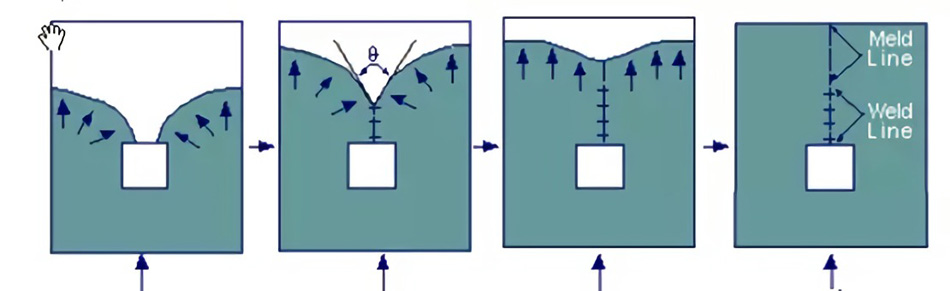
Weld lines occur when the molten plastic is injected into a mold and encounters a section where the flow front splits and later converges. The material flow at the meeting point is cooler and slower, leading to the formation of a weak spot, visible as a line on the part’s surface. Several factors contribute to the formation of weld lines, including:
1. If the material is injected too slowly, it may cool before it fully fills the mold cavity, resulting in an incomplete fusion at the weld line.
2. Poorly placed gates, runners, or other mold features can cause the molten plastic to flow in multiple directions, leading to weld lines.
3. If the injection pressure is too low, the material may not be forced through the mold cavity with enough force to create a smooth fusion at the meeting points.
4. If the plastic material does not flow uniformly, it can create regions where the flow fronts meet, forming weak weld lines.
5. Uneven or premature cooling can also contribute to weld line formation, as the material solidifies unevenly at the meeting points.
2. Poorly placed gates, runners, or other mold features can cause the molten plastic to flow in multiple directions, leading to weld lines.
3. If the injection pressure is too low, the material may not be forced through the mold cavity with enough force to create a smooth fusion at the meeting points.
4. If the plastic material does not flow uniformly, it can create regions where the flow fronts meet, forming weak weld lines.
5. Uneven or premature cooling can also contribute to weld line formation, as the material solidifies unevenly at the meeting points.
How to Avoid Weld Lines in Injection Molding
1. Optimize Injection Speed
The speed at which the molten plastic is injected into the mold plays a critical role in avoiding weld lines. Slow injection speeds can result in incomplete filling of the mold cavity, which leads to weld lines forming as the material solidifies. By increasing the injection speed, you can ensure that the material fills the cavity quickly and evenly, minimizing the chances of weld line formation.
- Tip: Implement a controlled injection speed profile to maintain a smooth and continuous flow of material into the mold.
2. Increase Injection Pressure
Injection pressure is another key factor in preventing weld lines. Insufficient injection pressure can cause weak material flow and lead to the formation of weld lines. By increasing the injection pressure, you can force the material to fill the mold more quickly and completely, preventing cold spots that lead to weak weld lines.
- Tip: Adjust injection pressure to the optimal levels based on the material and part design to ensure uniform filling of the mold cavity.
3. Modify Mold Design
Mold design is crucial in avoiding weld lines. Poorly placed gates, runners, and part geometries can create areas where the material flow meets at an angle, increasing the likelihood of weld lines. Ensuring a more uniform flow by adjusting the placement of the gates and optimizing the runner system can minimize this risk.
- Tip: Use multiple gates for better distribution of material and to direct the flow in such a way that minimizes the formation of weld lines.
- Tip: Ensure that gates are placed in the best locations to achieve the shortest and most direct path for material flow, reducing the chances of encountering multiple flow fronts.
- Tip: Ensure that gates are placed in the best locations to achieve the shortest and most direct path for material flow, reducing the chances of encountering multiple flow fronts.
4. Use Hot Runner Systems
Hot runner systems maintain the temperature of the molten plastic, ensuring that the material remains at the right viscosity for smooth flow throughout the mold. Inadequate material temperature can lead to solidification before the flow fronts meet, causing weld lines to form.
- Tip: Consider using a hot runner system to keep the material at a consistent temperature, reducing the chances of material solidifying prematurely and forming weld lines.
5. Improve Cooling System Design
An even and controlled cooling process is essential for avoiding weld lines. Uneven cooling can cause material to solidify at different rates, leading to weak weld lines where the flow fronts meet. Implementing an efficient cooling system that allows the mold to cool uniformly can reduce the formation of weld lines.
- Tip: Use optimized cooling channels within the mold to ensure uniform cooling and prevent premature solidification of the material in certain areas.
- Tip: Adjust cooling time and mold temperature to ensure that the material cools evenly, particularly in areas where the flow fronts meet.
- Tip: Adjust cooling time and mold temperature to ensure that the material cools evenly, particularly in areas where the flow fronts meet.
6. Use the Right Material
Material selection is a key factor in preventing weld lines. Some materials have better flow characteristics and are more resistant to weld lines than others. For example, materials with low viscosity flow better through the mold and are less likely to form weak spots.
- Tip: Choose materials with the right flow properties for your part design, as some resins are better suited for preventing weld lines due to their ability to flow more evenly.
7. Adjust Gate Location and Design
Gate location plays a major role in the formation of weld lines. If the gate is placed at the wrong location, it can cause the material to flow in multiple directions, leading to weld lines. Gates should be strategically placed to ensure the material flows into the cavity from multiple directions and joins at the most optimal points.
- Tip: Place gates in locations where they will encourage a direct and smooth flow of the material, minimizing the chances of flow front meeting at awkward angles.
- Tip: Use submarine gates or pinpoint gates for more precise material delivery, reducing the likelihood of weld line formation.
- Tip: Use submarine gates or pinpoint gates for more precise material delivery, reducing the likelihood of weld line formation.
8. Control Part Geometry
The geometry of the part being molded significantly impacts the formation of weld lines. Parts with thick sections or uneven wall thicknesses are more prone to experiencing weld lines. Streamlining part geometry and optimizing wall thickness can help reduce the risk of weld lines.
- Tip: Design parts with uniform wall thickness to promote even flow of material and reduce the chances of weld lines.
- Tip: Avoid complex geometries that require the material to flow through multiple paths and meet at multiple points.
- Tip: Avoid complex geometries that require the material to flow through multiple paths and meet at multiple points.
Preventing Weld Lines in a Plastic Housing Part
Problem: A manufacturer of plastic housings for consumer electronics was facing issues with weld lines on their parts. The weld lines were not only affecting the appearance of the parts but also their structural integrity.
Solution: The company implemented several changes to reduce weld lines:
1. Increased injection speed to ensure the material filled the cavity more quickly.
2. Optimized gate locations to allow for a more direct flow of material into the mold.
3. Improved cooling channels to ensure even cooling across the part.
4. Used multiple gates to ensure material flowed smoothly from all directions.
1. Increased injection speed to ensure the material filled the cavity more quickly.
2. Optimized gate locations to allow for a more direct flow of material into the mold.
3. Improved cooling channels to ensure even cooling across the part.
4. Used multiple gates to ensure material flowed smoothly from all directions.
Results: The manufacturer saw a significant reduction in weld lines, leading to improved part quality and reduced rework.
Key Takeaways for Avoiding Weld Lines
Weld lines are a common issue in injection molding, but they can be prevented with the right techniques and adjustments to the molding process. By optimizing injection speed and pressure, improving mold design, and ensuring uniform cooling, you can significantly reduce the risk of weld line formation. Additionally, careful material selection and gate placement can help ensure that the material flows evenly and fuses seamlessly.
By implementing these strategies, injection molding manufacturers can produce high-quality, aesthetically pleasing, and structurally sound parts that meet their customers' requirements while minimizing production waste.
TAIZHOU HOPO MOULD & PLASTIC TECHNOLOGY CO., LTD is a professional plastic injection mould maker and relevant plastic products manufacturer established in 2012. Our Factory is in Zhejiang, China. We enjoy convenient land, water and air transportation, so we could provide short delivery time once the production finished. HOPO offer many kinds of high quality moulds, including daily use commodity moulds, home appliance moulds, automotive moulds, pipe fitting moulds and industrial products moulds, also could directy offer you those relevant plastic parts prodcution.
Related Articles
 The Top Injection Molding Industry Leader 2026-02-24 0
 2026 Injection Molding Industry Leader 2026-02-24 0
 USA Top Custom Moulding Experts 2026-02-11 0
 2026 Architectural and Decorative Moulding Leaders in USA 2026-02-11 0
 2026 Top Industrial Plastic Injection Moulding Titans 2026-02-02 0
- 2026 Top Moulding Company 2026-02-02 0
- What Is an Aluminum Injection Mold and Why Is It Used 2026-01-19 0
 How Does Aluminum Material Grade Impact Mold Cost 2026-01-19 0
 The Cost of an Aluminum Injection Mold 2026-01-19 0
 What Affects the Cost of an Aluminum Injection Mold 2026-01-19 0
 What Is the Strength of the 7 Most Common Injection Molding Plastics 2026-01-12 0
 How Thick Can You Injection Mold Plastic 2026-01-12 0
 What Are the 7 Steps of PLC 2025-12-16 0
 What Is PLC in Injection Molding 2025-12-16 0
- What Is the Minimum Wall Thickness of the 7 Main Types of Plastic 2025-12-11 0
 Industry Standards or Guidelines for Wall Thickness by Application 2025-12-11 0
 Why Does Plastic Shrink More in Thick Sections in Injection Molding 2025-12-02 0
 The Strongest Plastic for Injection Molding 2025-12-02 0
- Why is Machine Assistance Essential in High-Demand Mould Shops 2025-11-20 0
 Common Defects and Limitations Must Mold Finishers Anticipate with CP 2025-11-20 0
