
How to Choose the Right Motorcycle Moulds Supplier
Motorcycle Moulds: Design, Applications, and How to Choose the Right Tooling Supplier
As the demand for high-performance motorcycles increases worldwide, manufacturers are under pressure to deliver parts that are lightweight, durable, and consistently high in quality. For many motorcycle components—especially those made of plastic or cast metal—the foundation of production starts with the motorcycle mould.
This article provides a complete guide for engineers, procurement teams, and OEMs who are evaluating or sourcing custom motorcycle moulds for injection molding or die casting. From design principles to supplier selection, here’s everything you need to know.
1. What Is a Motorcycle Mould? A Quick Introduction
A motorcycle mould is a precision tool used to produce repeatable, dimensionally accurate parts for motorcycles, typically through plastic injection molding or metal casting. These molds are designed based on the CAD model of a part and are fabricated using hardened steel or aluminum.
They are critical for:
Mass production of consistent parts
Ensuring correct fitment with other motorcycle components
Achieving tight tolerances and smooth finishes
2. Common Motorcycle Parts Produced by Injection Molding
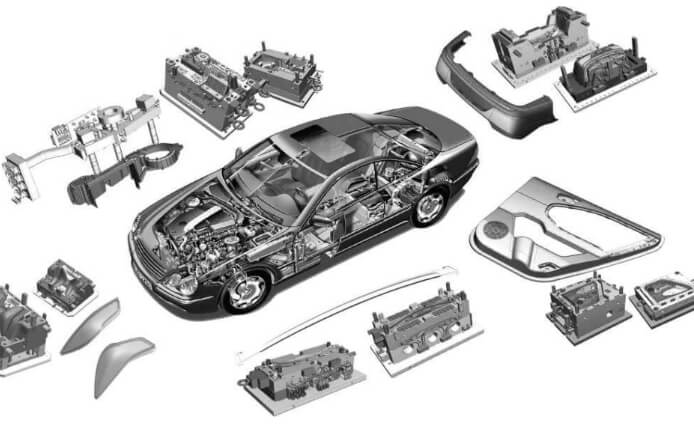
Motorcycle moulds are used across various plastic and lightweight components. Here are some common parts manufactured using injection molds:
| Component | Mold Type | Material |
|---|---|---|
| Front & rear fenders | Injection mould | ABS, PP, PC |
| Side fairings | Injection mould | ABS, PA+GF |
| Fuel tank covers | Injection mould | PP or ABS |
| Lighting housings | Two-color mould / lens mould | PC, PMMA |
| Handle grips (soft grip) | Overmold | TPE + ABS |
| Instrument panels | Multi-cavity injection mould | ABS+PC, TPO |
These parts demand high surface finishes, precise dimensional control, and long mold life—especially for export or OEM production.
3. Types of Motorcycle Moulds: Plastic vs. Metal Components
Motorcycle molds vary depending on the material and manufacturing process used:
? Plastic Injection Molds
Used for fairings, shrouds, lighting housings, panels
Often require multi-cavity and complex cooling channels
Materials: ABS, PP, PC, PA6
? Die Casting Molds
Used for metal parts such as crankcases, brake pedals, engine covers
Require high-temperature alloys and venting designs
Materials: Aluminum, zinc, magnesium
? Overmolding & Two-Shot Moulds
For parts with dual material zones (e.g., hard/soft grips, logos)
Requires specialized 2K machines and rotary platen molds
4. The Motorcycle Mould Manufacturing Process Explained
Creating a motorcycle mold is a multi-step precision process:
DFM Analysis – Review of part design for manufacturability
Mold Flow Simulation – Predicting how the plastic or metal will fill the cavity
Mold Design (2D & 3D CAD) – Core, cavity, runner, gate, ejection system
Tool Steel Selection – Depending on expected volume and material
CNC Machining / EDM – Tooling components are machined
Assembly and Tuning – Mold trial and part validation
Final Polishing and Texturing – Surface finish according to customer specs
Trial Runs (T0–T1) – Sample parts are molded and inspected
5. Key Considerations When Designing Motorcycle Moulds
For Engineers:
Draft Angles: Critical for part release and surface integrity
Wall Thickness Uniformity: Avoids warping and sink marks
Cooling System: Impacts cycle time and dimensional control
Ejection Mechanism: Choose pins, sleeves, or lifters based on geometry
Material Shrinkage: Consider expected shrink rate during cooling
Surface Texture & Logo Placement: Requires attention for branding and safety
6. Material Selection for High-Performance Molds
Choosing the right mold steel affects tooling durability, cycle time, and maintenance.
| Steel Type | Properties | Use Case |
|---|---|---|
| P20 | Pre-hardened, easy to machine | Medium-volume plastic parts |
| H13 | High-temp, wear-resistant | Die casting and overmolding |
| 718H | Corrosion-resistant, good polishability | Clear parts like lenses |
| NAK80 | Mirror finish, no heat treatment needed | Transparent or decorative parts |
| S136 | High hardness, corrosion resistance | Medical or export-grade parts |
Tip: For high-volume motorcycle parts, always prioritize steels with high polishability and long mold life (500,000 to 1,000,000 shots).
7. How to Evaluate Motorcycle Mould Quality
Here’s how engineers and buyers can assess mold quality before mass production:
Part Tolerances: Check against GD&T standards
Cycle Time Efficiency: Mold cooling and ejection performance
Flash-Free Edges: Clean finish, minimal trimming
Uniform Fill: No short shots or sink marks
Surface Finish: Meets SPI or VDI standard for texture or gloss
Steel Certification: From steel supplier, showing proper grade used
Tooling Life Estimate: Based on material and usage
8. Motorcycle Mould Maintenance and Lifespan
A well-maintained mold can run hundreds of thousands of cycles. Maintenance tips:
Clean after every production shift (especially vents and gates)
Check alignment pins, ejector pins, and moving parts regularly
Re-polish worn cavities or textured zones after set intervals
Lubricate sliding areas and cooling channels as scheduled
Preventive maintenance ensures consistent quality and maximizes ROI.
9. How to Choose a Reliable Motorcycle Mould Supplier
When sourcing a motorcycle mold supplier, consider:
In-house DFM and engineering support
Mold flow analysis capabilities
Experience with motorcycle/OEM parts
Certified quality control process (ISO 9001, IATF 16949)
Support for sample production and mass molding
After-sales tooling support (repair, adjustment)
If possible, request to visit the supplier’s facility or ask for past project case studies.
10. Cost Factors and Lead Time: What Buyers Should Expect
| Cost Factor | Impact on Price |
|---|---|
| Mold size & complexity | Larger/multi-cavity molds cost more |
| Steel type | Premium steel increases upfront cost but lasts longer |
| Surface finish & texture | Polishing, EDM texturing, or laser etching adds cost |
| Expected life (number of shots) | High-life tools need stronger materials |
| Lead time | Average 4–8 weeks, depending on complexity |
Always request a detailed quote with clear breakdowns for mold base, cavities, cooling, and shipping.
11. Case Study: Custom Tail Light Housing Mould for Motorcycle OEM
Client: Global motorcycle brand
Part: Rear LED light cover
Specs: PC material, SPI-A2 finish, 2-cavity mold
Challenge: Clear part needed high light transmission and no flow lines
Solution: High-polish 718H steel + optimized gate location + mold flow simulation
Result: Passed validation on T1, 600,000+ shots, minimal rework
12. Request a Quote: What to Prepare Before Ordering a Mold
To speed up your quotation process, prepare:
3D CAD file of the part (STEP/IGES)
Estimated annual production volume
Resin or alloy type
Desired surface finish
Quality expectations or tolerances
Any branding/logo or overmold requirements
Tooling lifetime (number of shots)
Once shared with your mold supplier, they can offer accurate cost, material selection, and lead time.
Conclusion
Whether you're producing fairings, tail lights, or engine covers, motorcycle moulds are foundational to quality and efficiency. By understanding the tooling process and partnering with the right supplier, you can reduce costs, speed up time-to-market, and deliver superior products to your customers.
Ready to source your next motorcycle mold?
Get in touch with our engineering team for a free DFM review and customized quote. We’ll guide you from concept to production with precision and reliability.
Related Articles
 The Top Injection Molding Industry Leader 2026-02-24 0
 2026 Injection Molding Industry Leader 2026-02-24 0
 USA Top Custom Moulding Experts 2026-02-11 0
 2026 Architectural and Decorative Moulding Leaders in USA 2026-02-11 0
 2026 Top Industrial Plastic Injection Moulding Titans 2026-02-02 0
- 2026 Top Moulding Company 2026-02-02 0
- What Is an Aluminum Injection Mold and Why Is It Used 2026-01-19 0
 How Does Aluminum Material Grade Impact Mold Cost 2026-01-19 0
 The Cost of an Aluminum Injection Mold 2026-01-19 0
 What Affects the Cost of an Aluminum Injection Mold 2026-01-19 0
 What Is the Strength of the 7 Most Common Injection Molding Plastics 2026-01-12 0
 How Thick Can You Injection Mold Plastic 2026-01-12 0
 What Are the 7 Steps of PLC 2025-12-16 0
 What Is PLC in Injection Molding 2025-12-16 0
- What Is the Minimum Wall Thickness of the 7 Main Types of Plastic 2025-12-11 0
 Industry Standards or Guidelines for Wall Thickness by Application 2025-12-11 0
 Why Does Plastic Shrink More in Thick Sections in Injection Molding 2025-12-02 0
 The Strongest Plastic for Injection Molding 2025-12-02 0
- Why is Machine Assistance Essential in High-Demand Mould Shops 2025-11-20 0
 Common Defects and Limitations Must Mold Finishers Anticipate with CP 2025-11-20 0
