
What is Front Loader Washing Machine Mould?
In our daily life, front loader washing machine mould has become an indispensable home appliance in many families, and its manufacture cannot be separated from the precision plastic injection molding technology. We will delve into what a front loader washing machine mould is, discussing the design and structure of washing machine molds, the manufacturing process and material selection, as well as their applications and needs in the market. We will also introduce HOPO's front loader washing machine mould and discuss their advantages in this field.
-
Design and structure of front loader washing machine mould
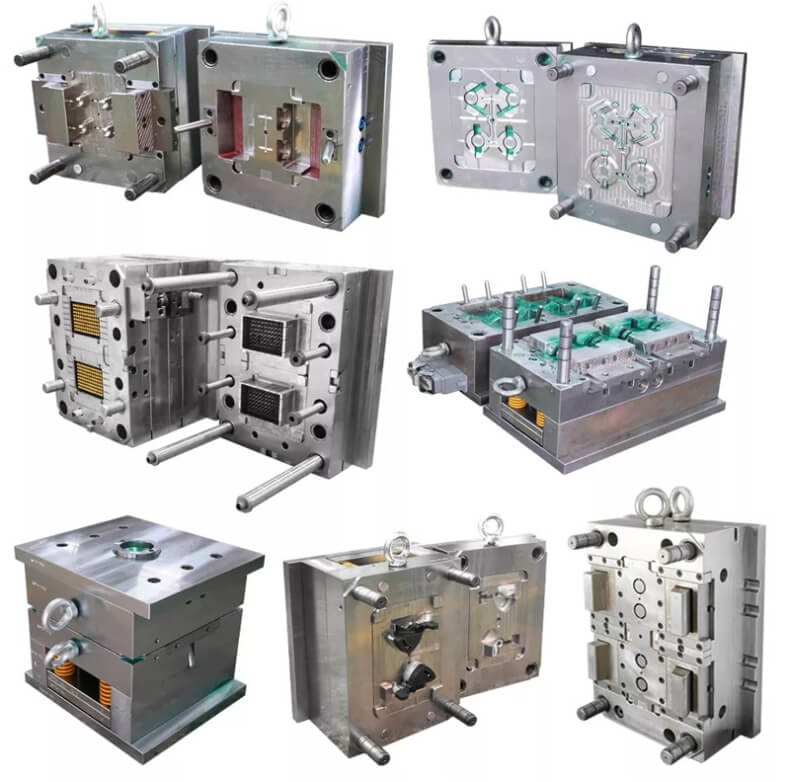
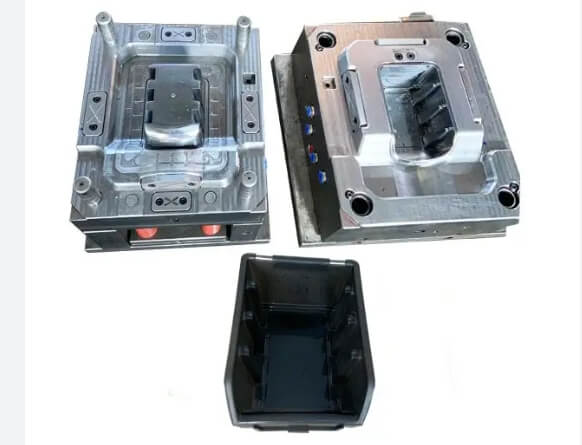
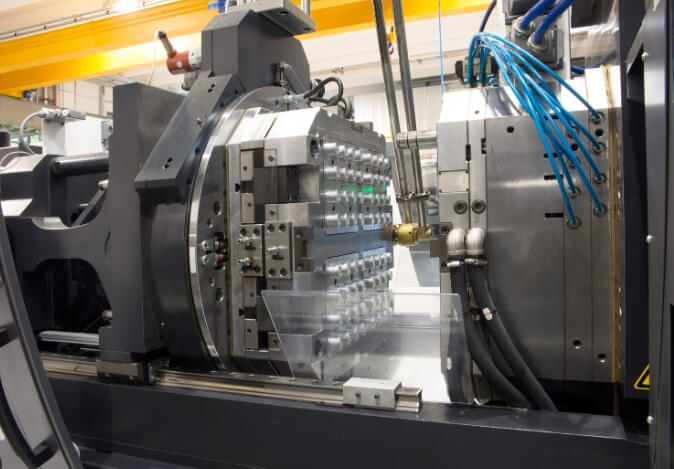
A front loader washing machine mould is an injection mold specifically designed to manufacture the external structure and internal parts of a drum washing machine. An injection mold is a tool used in an injection molding machine to form a product of a specific shape by injecting melted plastic into the mold. In a drum washing machine mold, its design takes into account the overall structure of the washing machine, including the shape of the outer shell, the shape of the inner drum, the water inlet and drain, and other key parts.
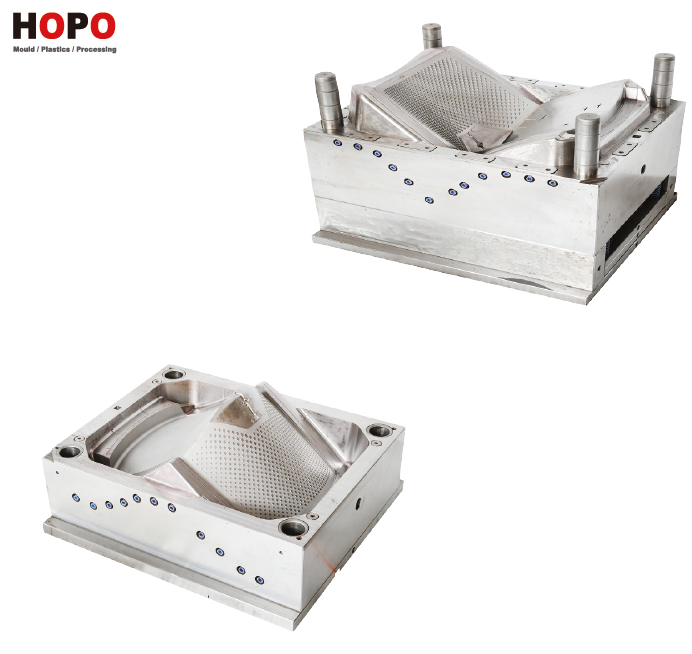
The components of a front loader washing machine mould include the main structure of the mold, the mold cavity and the mold core. The main structure of the mold is usually composed of high-strength metal materials to ensure that the mold can withstand high pressure and high temperature during the injection process. Cavities and cores are the key parts of the mold, and their design directly determines the shape and structure of the final product. In a drum washing machine mold, the cavity is responsible for forming the external structure, while the core is used to shape the internal details, such as the concave and convex surfaces of the drum.
Considering the use environment and working principle of washing machines, the mold needs to be characterized by high strength, high wear resistance and high precision. The design of the mold also needs to fully consider the cooling effect during the injection process to ensure the quality and stability of the final product. In addition, the design of the mold should also focus on energy saving and environmental protection, choose the appropriate materials and manufacturing process to reduce the impact of the production process on the environment.
-
Manufacturing process and material selection
Manufacturing process
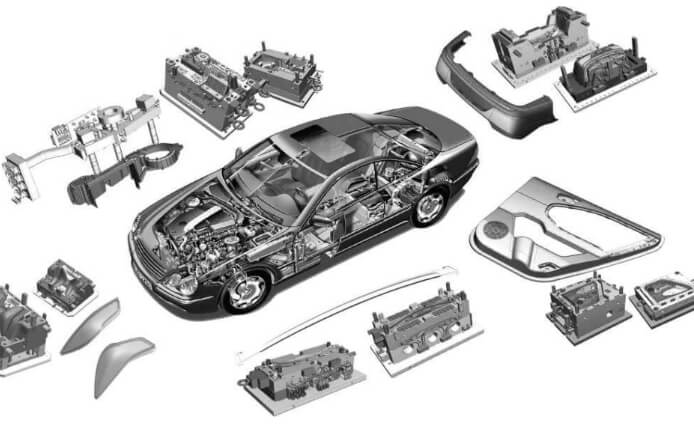
The manufacturing of injection molds usually includes multiple stages such as design, processing, assembly and commissioning. First, the mold is designed through CAD (Computer Aided Design) software, taking into account the complex structure and details of the drum washing machine. Once the design is complete, the manufacturer selects the appropriate metal material, usually high-strength tool steel or stainless steel, to ensure that the mold will maintain its structural stability during the high-temperature and high-pressure injection process.
The manufacturing process starts with rough machining of the mold, such as milling and turning, followed by fine machining through processes such as EDM or wire EDM to finally obtain the main structure of the mold. The mold cavities and cores of the mold require higher precision machining to ensure the size and surface finish of the final product. After the assembly is completed, debugging is done to ensure that the functions of the mold are normal to meet the demand of high quality production.
Material Selection
The choice of material for the front loader washing machine mould is critical to the performance and life of the drum washer mold. Materials typically used include tool steel, stainless steel and carbide. Tool steel has excellent strength and hardness and is suitable for most injection molds. Stainless steel offers corrosion resistance while also providing enough strength for long-term production needs. Cemented carbide is usually used in some wear-resistant parts of the mold to improve the service life of the mold.
In the material selection, also need to consider the compatibility of injection molding materials and mold materials. Different plastics require different injection temperatures and pressures, the front loader mould material must be able to withstand these changes without losing stability. Therefore, the choice of materials need to consider the mechanical properties, wear resistance, thermal conductivity and processability and other factors.
-
Washing machine mould applications and market demand
Application areas
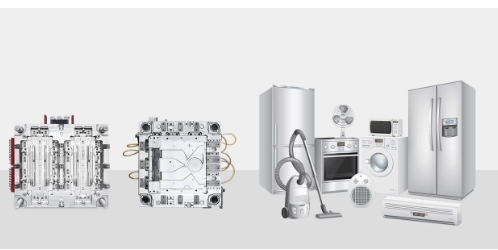
Washing machine mould are mainly used in the manufacture of various types of washing machines, including drum washing machines, wave washing machines, front-loading washing machines and so on. These different types of washing machine molds have certain differences in structure and design to adapt to different washing principles and user needs. For example, drum washing machine molds need to take into account the shape of the drum and the law of movement, while front-loading washing machine molds need to adapt to the way the door opens and the design of the washing drum.
The application of washing machine mould is not limited to domestic washing machines, but also includes commercial and industrial uses. Commercial washing machines are usually used in hotels, hospitals, laundromats, etc., which require higher durability and high productivity of the molds. Industrial washing machine mold, on the other hand, involve mass production and require more precise and efficient designs.
Market Demand
With the improvement of living standards and the continuous development of home appliance technology, consumer demand for washing machines has also changed. First of all, high efficiency and energy saving are the general market demands for washing machines. Washing machine mold need to give full consideration to the balance between washing effect and energy consumption in their design, in order to meet users' dual expectations for cleanliness and environmental performance.
Appearance and intelligence become the market hotspot. Washing machine mould is not only functional part, but also take on the task of appearance design. Fashion, simplicity and easy cleaning have become important considerations for users to choose washing machines. Intelligent washing machines also drive innovation in washing machine molds, such as the application of embedded sensors and intelligent control systems.
Durability and cost-effectiveness are common concerns for both manufacturers and consumers. Washing machine mould needs to withstand long hours and high-frequency injection production, so the choice of materials and manufacturing processes are particularly important. At the same time, washing machine manufacturers also need to control production costs while ensuring product quality in order to provide more competitive products.
-
HOPO's front loader washing machine mould
HOPO is committed to the research, development and manufacture of injection molds, focusing on the design, manufacture and sales of front loader washing machine mould, and has earned a good reputation for product quality, technical innovation and customer service.
HOPO's front-loading washing machine mold embodies a number of advanced technologies and innovative features in its design and manufacture. The design of the front loader mould takes into full consideration the structural and functional requirements of the washing machine mould, ensuring that the product fits perfectly into the overall design of the washing machine. The precise design of the mold cavities and cores makes the product surface clean and the dimensions accurate, thus ensuring the high quality of injection molding.HOPO uses high quality mold materials and the manufacturing process of the molds is carefully optimized to ensure production efficiency and cost control without sacrificing the quality of the products.
Related Articles
 The Top Injection Molding Industry Leader 2026-02-24 0
 2026 Injection Molding Industry Leader 2026-02-24 0
 USA Top Custom Moulding Experts 2026-02-11 0
 2026 Architectural and Decorative Moulding Leaders in USA 2026-02-11 0
 2026 Top Industrial Plastic Injection Moulding Titans 2026-02-02 0
- 2026 Top Moulding Company 2026-02-02 0
- What Is an Aluminum Injection Mold and Why Is It Used 2026-01-19 0
 How Does Aluminum Material Grade Impact Mold Cost 2026-01-19 0
 The Cost of an Aluminum Injection Mold 2026-01-19 0
 What Affects the Cost of an Aluminum Injection Mold 2026-01-19 0
 What Is the Strength of the 7 Most Common Injection Molding Plastics 2026-01-12 0
 How Thick Can You Injection Mold Plastic 2026-01-12 0
 What Are the 7 Steps of PLC 2025-12-16 0
 What Is PLC in Injection Molding 2025-12-16 0
- What Is the Minimum Wall Thickness of the 7 Main Types of Plastic 2025-12-11 0
 Industry Standards or Guidelines for Wall Thickness by Application 2025-12-11 0
 Why Does Plastic Shrink More in Thick Sections in Injection Molding 2025-12-02 0
 The Strongest Plastic for Injection Molding 2025-12-02 0
- Why is Machine Assistance Essential in High-Demand Mould Shops 2025-11-20 0
 Common Defects and Limitations Must Mold Finishers Anticipate with CP 2025-11-20 0
