
What Is Two-Color Molding?

Two-Color Molding Process, Benefits, Applications, and Machine Selection Guide
As today’s products become more compact, functional, and visually appealing, manufacturers are turning to two-color molding (also known as two-shot or multi-material injection molding) as a strategic solution. This advanced technique allows engineers and designers to combine two materials or colors into a single molded part, reducing assembly steps and improving part performance.
Whether you’re a product engineer designing your next consumer device or a molding specialist looking to upgrade your technology, this guide will walk you through how two-color molding works, its advantages, and how to decide if it’s right for your application.
1. What Is Two-Color Molding?
Two-color molding is a specialized injection molding process where two different materials or colors are molded into one part in a single cycle. It eliminates the need for secondary assembly or bonding.
This is commonly used when:
- You want soft-touch grips on rigid parts
- You want to add a second color for aesthetics or branding
- You need multi-functionality within one molded unit (e.g., clear + opaque sections)
2. How the Two-Shot Injection Molding Process Works
The two-color molding process uses either:
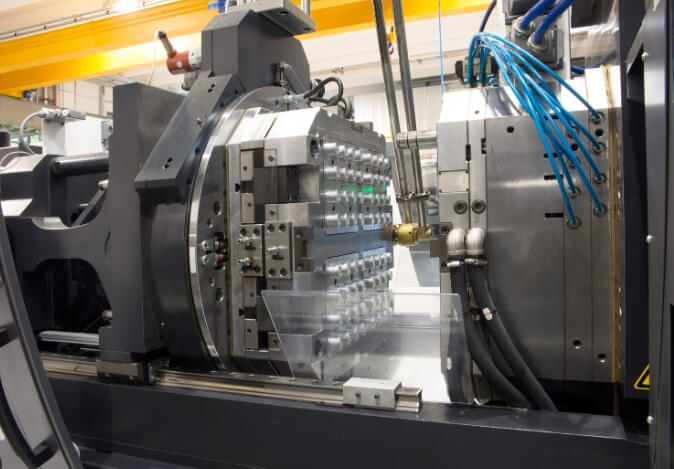
- Two injection units on the same machine, or
- A rotary platen or transfer system to shift the mold between shots.
General Process Flow:
- First shot: The base material (usually the structural component) is injected into the cavity.
- Indexing: The mold rotates or the part moves to a second cavity while still inside the machine.
- Second shot: The second material is injected—either over, into, or alongside the first material—to complete the part.
? Note: This process requires specialized two-shot machines and custom mold design.
3. Types of Two-Color Molding Machines and Tooling
There are different machine configurations depending on production needs:
| Type | Best For | Description |
|---|---|---|
| Rotary platen two-shot machines | High-volume production | Mold rotates 180° between first and second shots |
| Core-back molds | Large parts or when using same cavity | A sliding core exposes a second cavity for overmolding |
| Transfer molding | Separate molds with manual or robotic transfer | Used for lower volumes or prototyping |
| Spin-stack molding | High cavitation and simultaneous injection | Rotating central stack transfers part for second shot |
Each configuration requires precise mold design to ensure alignment, adhesion, and performance of the combined materials.
4. Advantages of Two-Color Molding Over Traditional Methods
Two-color molding offers significant benefits in both design flexibility and cost savings:
- ✅ Eliminates assembly – Reduces labor, fixtures, and bonding steps
- ✅ Improves durability – Creates a stronger bond between materials
- ✅ Enhances aesthetics – Enables branding, labeling, or transparent/colored combinations
- ✅ Boosts production efficiency – Produces complex parts in a single cycle
- ✅ Reduces defects – Better alignment and fewer contamination risks than post-assembly
5. Two-Color Molding vs. Overmolding: What’s the Difference?
| Feature | Two-Color Molding | Overmolding |
|---|---|---|
| Number of shots | Two (in one cycle) | Typically two (in separate steps) |
| Cycle time | Shorter (both shots in one mold cycle) | Longer (requires cooling/repositioning) |
| Equipment | Specialized 2K machines required | Standard single-shot machines can be used |
| Adhesion strength | Superior (molecular bonding) | Good but may depend on surface prep |
| Applications | High-volume, complex designs | Lower volume or flexible/retrofit designs |
If you’re running high volumes and need seamless integration, two-color molding is more efficient. For prototyping or post-processed layering, overmolding may suffice.
6. Material Compatibility for Two-Shot Injection Molding
Material bonding is critical. Not all plastics bond well during two-color molding. You must choose materials with chemical compatibility and similar melt temperatures.
| First Shot (Base Material) | Second Shot (Overmold Material) | Example Use |
|---|---|---|
| ABS | TPE | Soft-touch handles |
| PC | TPU | Consumer electronics |
| PP | PP (colored) | Two-color storage bins |
| PA6 | PA6 + GF | Structural housings with flexible seals |
| PMMA | PMMA (transparent + colored) | Automotive lighting lenses |
Tip for engineers: Ask material suppliers for "two-shot compatibility charts" or test bonding through sample molding before full-scale production.
7. Design Guidelines and Mold Considerations
Two-color molding adds complexity to both part and mold design. Here are a few key guidelines:
- Design parts with alignment features between first and second shots
- Account for shrinkage differences between the two materials
- Ensure sufficient bonding surface area for adhesion
- Design vents carefully to avoid trapping air during the second shot
- Choose non-interfering gate locations for both injection points
Proper design will reduce the risk of flashing, poor bonding, and dimensional issues.
8. Typical Applications Across Industries
Two-color molding is widely used in industries where aesthetics, functionality, and cost-efficiency intersect:
| Industry | Example Product |
|---|---|
| Automotive | Tail lights, gear knobs, control panels |
| Consumer Electronics | Game controllers, earbuds, remote housings |
| Medical Devices | Syringes, inhalers, diagnostic handles |
| Home Appliances | Blender buttons, knobs, dials |
| Personal Care Products | Toothbrushes, razors, cosmetic containers |
| Tools & Hardware | Power tool grips, screwdriver handles |
9. Challenges and Limitations of Two-Color Molding
While powerful, two-color molding isn’t without its drawbacks:
- Higher upfront tooling cost due to complex molds
- Longer lead times for mold fabrication and testing
- Requires specialized machines and training
- Material selection limits if incompatible polymers are chosen
These challenges are offset when the process leads to mass production savings, improved quality, and fewer downstream operations.
10. Choosing the Right Partner for Two-Color Injection Molding Projects
To successfully implement two-color molding, you’ll need a partner with:
- Experience in multi-material mold design and production
- In-house capability for 2K injection molding machines
- A strong understanding of material science and adhesion
- CAD simulation tools to test flow, cooling, and bonding
Some manufacturers also offer design-for-manufacturing (DFM) support to ensure your part is optimized for two-shot molding from the start.
Two-color molding is more than just an aesthetic upgrade—it’s a smart, efficient process that can help manufacturers produce better parts faster and at lower cost over time. For engineering teams looking to consolidate parts, reduce post-processing, and boost design flexibility, two-color injection molding is a proven, scalable solution.
Ready to explore two-color molding for your next project?
Whether you're evaluating machine options or seeking a full-service molding partner, our team can help guide you through tooling, design, and production.
Related Articles
 The Top Injection Molding Industry Leader 2026-02-24 0
 2026 Injection Molding Industry Leader 2026-02-24 0
 USA Top Custom Moulding Experts 2026-02-11 0
 2026 Architectural and Decorative Moulding Leaders in USA 2026-02-11 0
 2026 Top Industrial Plastic Injection Moulding Titans 2026-02-02 0
- 2026 Top Moulding Company 2026-02-02 0
- What Is an Aluminum Injection Mold and Why Is It Used 2026-01-19 0
 How Does Aluminum Material Grade Impact Mold Cost 2026-01-19 0
 The Cost of an Aluminum Injection Mold 2026-01-19 0
 What Affects the Cost of an Aluminum Injection Mold 2026-01-19 0
 What Is the Strength of the 7 Most Common Injection Molding Plastics 2026-01-12 0
 How Thick Can You Injection Mold Plastic 2026-01-12 0
 What Are the 7 Steps of PLC 2025-12-16 0
 What Is PLC in Injection Molding 2025-12-16 0
- What Is the Minimum Wall Thickness of the 7 Main Types of Plastic 2025-12-11 0
 Industry Standards or Guidelines for Wall Thickness by Application 2025-12-11 0
 Why Does Plastic Shrink More in Thick Sections in Injection Molding 2025-12-02 0
 The Strongest Plastic for Injection Molding 2025-12-02 0
- Why is Machine Assistance Essential in High-Demand Mould Shops 2025-11-20 0
 Common Defects and Limitations Must Mold Finishers Anticipate with CP 2025-11-20 0
