
Guide To High Precision Injection Mold
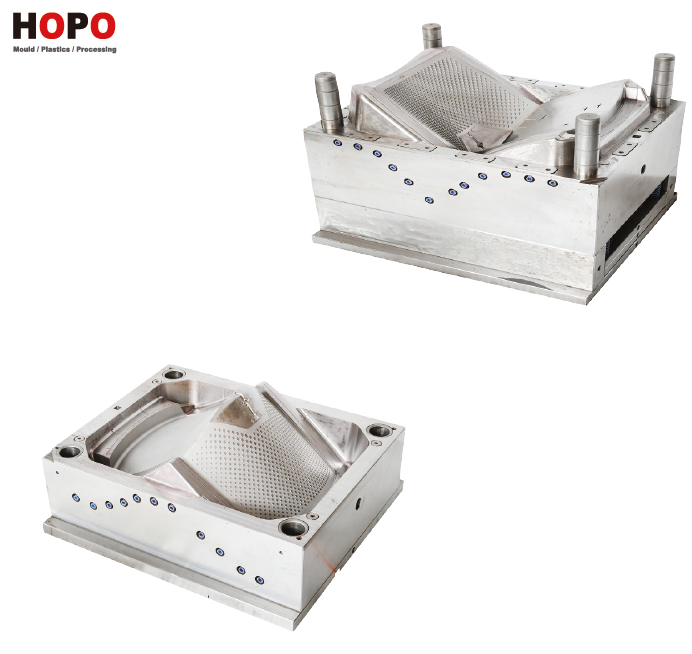
With the rapid advancement of high precision injection mold, China's precision mold industry has taken a leading position globally. Presently, precision moulds exhibit some distinctive characteristics and applications.
Characteristics of high precision injection mold:
Wear Resistance
During plastic deformation within the precision mould cavity, the blank undergoes flow and sliding along the cavity's surface, causing substantial friction. This friction can lead to mold failure due to wear. Therefore, material wear resistance is a fundamental and crucial property for molds.
Hardness is the primary factor influencing wear resistance. Generally, higher hardness in mold parts results in reduced wear and improved wear resistance. The type, quantity, shape, size, and distribution of carbides in the material also affect wear resistance.
Strong Toughness
Operating conditions for precision moulds are often challenging, involving significant impact loads that may lead to brittle fracture. To prevent sudden brittleness during operation, precision metal molds must possess high strength and toughness.
The mold's toughness primarily depends on the material's carbon content, grain size, and organizational state.
Fatigue Fracture Performance
Automotive plastic injection molding frequently encounter fatigue fractures during prolonged exposure to cyclic stress. Different forms of fatigue fractures include small-energy multiple-impact fatigue fracture, tensile fatigue fracture, contact fatigue fracture, and bending fatigue fracture.The mold's fatigue fracture performance relies on its strength, toughness, hardness, and the content of inclusions in the material.
High Temperature Performance
Elevated working temperatures can lead to reduced hardness and strength, causing premature wear or plastic deformation and failure. Precision plastic mold materials should exhibit high anti-tempering stability, ensuring the mold maintains high hardness and strength at working temperatures.
Surface Finish:
Heat Resistance:
Cost-Effectiveness:
Manufacturing processes and process control of high precision injection mold:
A. Application of advanced manufacturing technology
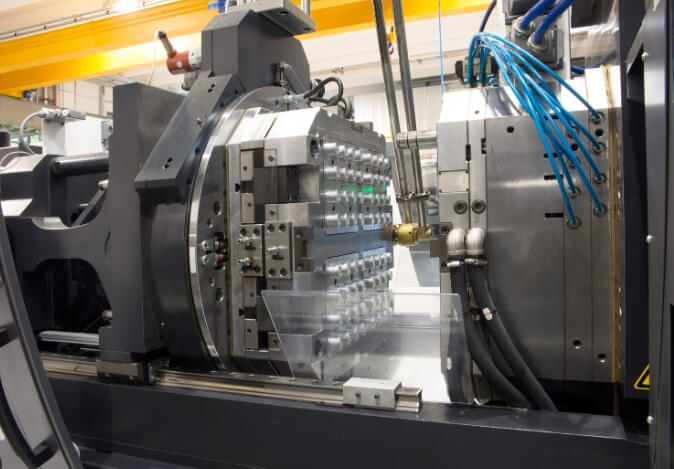
In the manufacture of high precision injection mold, advanced manufacturing technology plays a crucial role. CNC machining (CNC) is one of the core technologies. Through CNC machining, precise control of each part of the mold can be realized to ensure its dimensional accuracy and surface finish. In addition, the application of high-precision machining technologies such as EDM and wire cutting further improves the manufacturing accuracy of molds.
The development of 3D printing technology also brings new possibilities for the manufacture of high-precision injection molds. Through 3D printing, it is possible to manufacture mold parts with complex shapes, and it is possible to adjust the design more flexibly and shorten the product development cycle. This innovative manufacturing technology provides more options for the customization of high-precision injection molds.
B. Role of CNC machining in high-precision mold manufacturing
The role of CNC machining technology in the manufacture of high-precision injection molds cannot be ignored. Through CNC machining, the machining process of the mold is automated and digitally controlled, which greatly improves the precision and efficiency of machining. CNC machining system can directly control the machine tool according to the design drawings for processing, avoiding the impact of human factors on processing quality.
At the same time, CNC machining can also be applied to a variety of materials, including metals, plastics and composite materials, making the manufacturing process more flexible and diverse. This precision processing technology provides a reliable basis for the manufacture of high-precision injection molds.
C. Process control and quality assurance
In the manufacture of high-precision injection molds, strict process control is a key step to ensure product quality. A number of parameters, including temperature control, pressure control, injection speed and so on, need to be precisely regulated to ensure the consistency of each injection cycle. This process control not only improves the precision of injection molding, but also avoids mold wear and damage caused by process fluctuations.
Quality assurance is another key aspect of the manufacturing process. Through the use of advanced inspection equipment, such as CMMs and laser scanners, each component of the mold can be thoroughly inspected and analyzed. This helps to detect potential quality problems early and ensures that the final production of high-precision injection molds meets design requirements.

Application areas of high precision injection molds:
1. Medical device manufacturing: Medical devices require very high dimensions and surface quality of the products, and high-precision injection molds can accurately control the dimensions of the products to ensure the accuracy and surface finish of the products. Medical injection molded products, such as syringes, medical piping, etc., often need to use high-precision injection molds to ensure product quality and safety.
2. Electronics manufacturing: In the electronics industry, the product is small in size and complex in structure, with strict requirements on dimensional accuracy and material. High-precision injection molds can be used to produce a variety of electronic parts, such as connectors, switches, plastic shells and so on. Its high-precision manufacturing process to ensure the stability and reliability of the performance of electronic products.
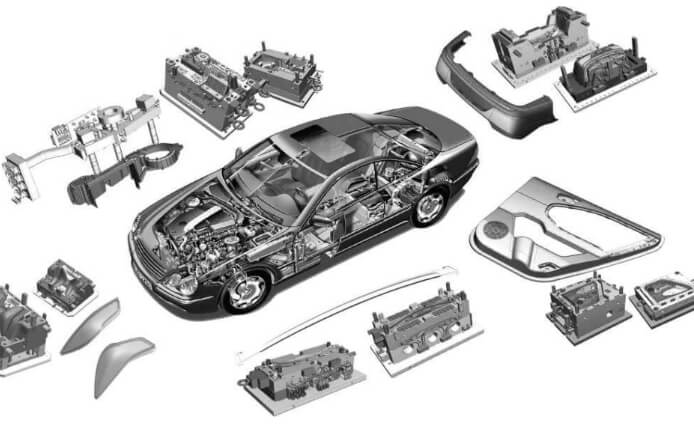
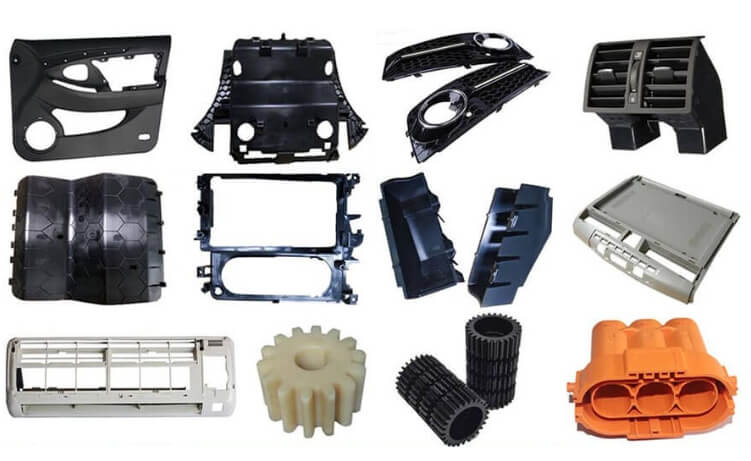
3. automotive parts production: the automotive industry on the parts of the precision and quality requirements are extremely high, and car plastic molding can be produced in line with the standards of the automotive industry precision parts. This includes automotive interior parts, sensor housings, headlight lenses and so on. The application of automotive plastic molding helps to improve the accuracy and performance of automotive parts.
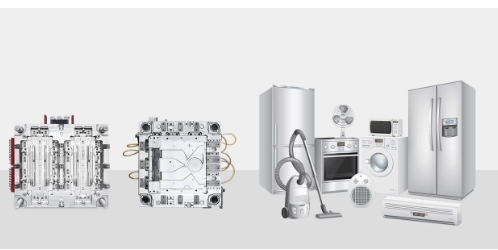
4. Household appliances: household appliances in the field of product appearance and high performance requirements, and high-precision injection molds can produce a beautiful shape, accurate size of the home appliance shell, buttons and other parts. This includes air conditioning panels, washing machine buttons, TV remote control shell.
5. Packaging industry: in the food, pharmaceutical and other industries, packaging closure and durability of the mold requires high precision. High precision injection molds can be applied to produce a variety of packaging caps, seals, etc.. Their high-precision manufacturing ensures the integrity and freshness of the package. 6.
Market Trends and Development Prospects of High-Precision Injection Molds
With the continuous progress of science and technology and the improvement of product precision requirements in various industries, the market for high-precision injection molds has shown a trend of steady growth. In the future, with the application of new materials and continuous innovation of manufacturing technology, high-precision injection molds will play an important role in more fields.
In the upgrading and transformation of the global manufacturing industry, high-precision injection molds will become an important driver to promote industrial upgrading. At the same time, with the pursuit of product quality and efficiency in various industries, high-precision injection mold market is expected to usher in a broader space for development.
About HOPO
As a professional mold manufacturer, HOPO offers different types of mold of custom molded plastics.In the leading trend of high-precision injection molds, Hopo has always been a leader in the industry with superior quality and innovative spirit. With a highly professional team, advanced technical equipment and strict quality control, we provide our customers with excellent high-precision injection molding solutions.
Related Articles
 The Top Injection Molding Industry Leader 2026-02-24 0
 2026 Injection Molding Industry Leader 2026-02-24 0
 USA Top Custom Moulding Experts 2026-02-11 0
 2026 Architectural and Decorative Moulding Leaders in USA 2026-02-11 0
 2026 Top Industrial Plastic Injection Moulding Titans 2026-02-02 0
- 2026 Top Moulding Company 2026-02-02 0
- What Is an Aluminum Injection Mold and Why Is It Used 2026-01-19 0
 How Does Aluminum Material Grade Impact Mold Cost 2026-01-19 0
 The Cost of an Aluminum Injection Mold 2026-01-19 0
 What Affects the Cost of an Aluminum Injection Mold 2026-01-19 0
 What Is the Strength of the 7 Most Common Injection Molding Plastics 2026-01-12 0
 How Thick Can You Injection Mold Plastic 2026-01-12 0
 What Are the 7 Steps of PLC 2025-12-16 0
 What Is PLC in Injection Molding 2025-12-16 0
- What Is the Minimum Wall Thickness of the 7 Main Types of Plastic 2025-12-11 0
 Industry Standards or Guidelines for Wall Thickness by Application 2025-12-11 0
 Why Does Plastic Shrink More in Thick Sections in Injection Molding 2025-12-02 0
 The Strongest Plastic for Injection Molding 2025-12-02 0
- Why is Machine Assistance Essential in High-Demand Mould Shops 2025-11-20 0
 Common Defects and Limitations Must Mold Finishers Anticipate with CP 2025-11-20 0
